 Nashville
Franklin
Brentwood
Nashville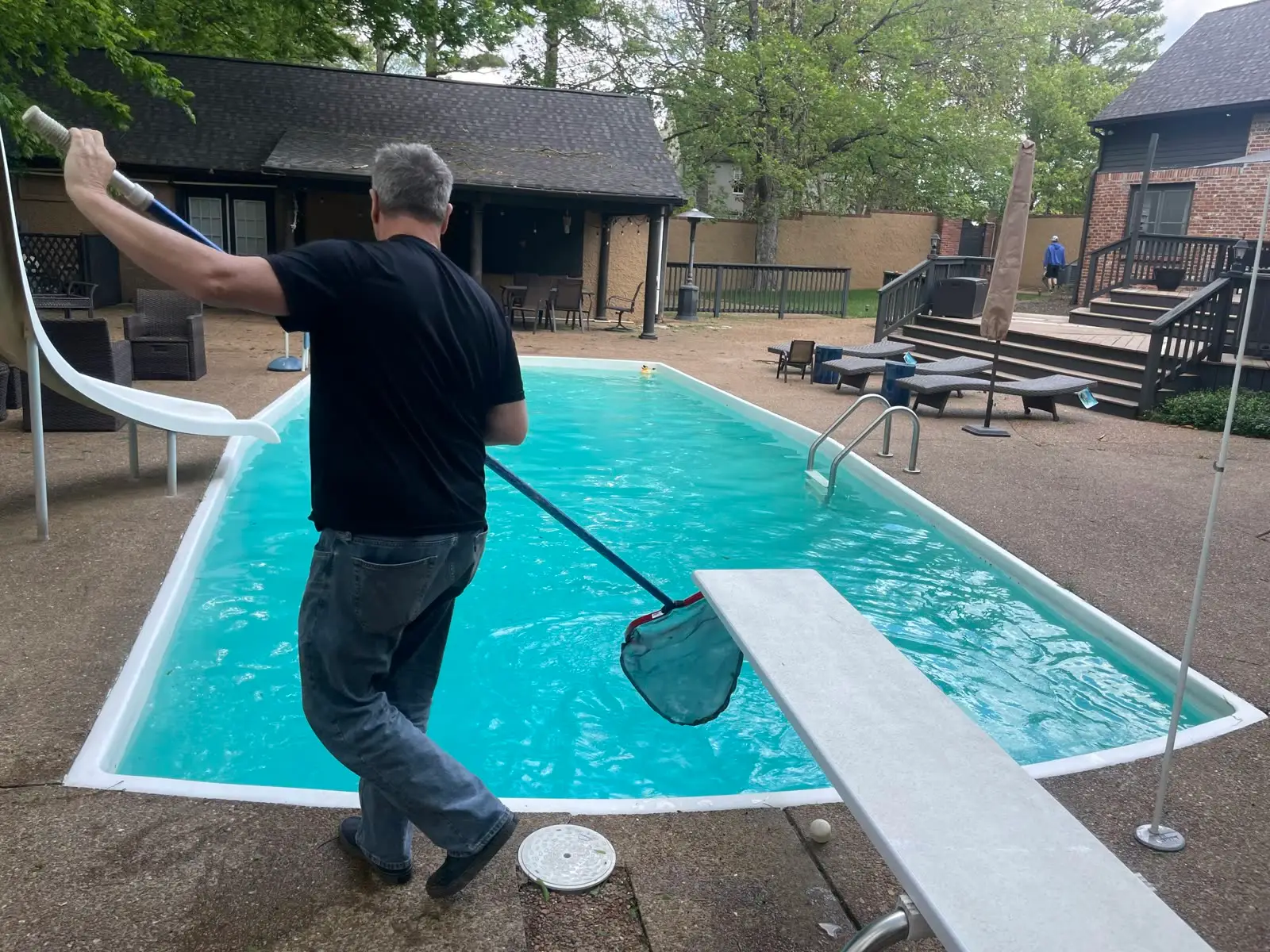
Home / Services / Pool Cleaning / Weekly Pool Service
Pool Cleaning
Passion Pool Care provides weekly pool service in Nashville with the same friendly tech on the same day every week. We test and balance the water, brush, skim, empty the baskets and check the equipment, so your pool is ready whenever you are.
Local
Greater Nashville based
Reliable
Weekly, like clockwork
Since 2013
Over a decade of pool care
Family Owned
Real people, real care
What's included
Our weekly pool service gives your pool a set day, the same friendly technician and a full routine on every visit. We test and balance the water on site, brush the walls, steps and tile line, skim the surface and vacuum when debris has settled. Then we empty the skimmer and pump baskets, read the filter pressure and check the pump, filter and heater.
For pool maintenance in Nashville, weekly is the interval that fits. Summer sun and heat use up chlorine quickly, afternoon storms knock pH around, and tree cover from Belle Meade to Brentwood keeps leaves and pollen in the water for much of the year. A weekly visit catches each of those before it turns into cloudy water, algae or a strained pump. Below, you'll find the signs a pool needs a steady routine, what each test number means, how we handle brushing, baskets and filter pressure, and how the routine shifts through the Nashville seasons.
Passion Pool Care is family-owned and has been run by John and Tammy since 2013. We care for in-ground pools across Davidson, Williamson and Rutherford counties and work on all major equipment brands, including Pentair, Hayward, Jandy and Zodiac. Getting started takes three simple steps and a free, no-pressure quote.
Is it time?
Most of these show up weeks before the water turns green. A standing weekly visit costs less than the cleanup that follows.
01
The water is clear on Monday and cloudy by Thursday.
02
You keep buying chlorine and shock between visits.
03
A slippery film shows up on the steps, in corners or along the tile grout.
04
The pool has a strong chlorine-like smell or stings your eyes.
05
Nobody has read the filter pressure gauge in months.
06
Leaves sit on the floor long enough to leave dark stains.
Why weekly works
Here is what happens on every visit, why each step matters in the Nashville climate, and how the routine shifts from pollen season to the first freeze.
Chlorine never sits still in an outdoor pool. Sunlight breaks it down fast, and without stabilizer, about half of the chlorine in the water can be gone in less than an hour of direct sun. Stabilizer, also called cyanuric acid, helps chlorine last three to ten times longer. Even so, sun, heat, swimmers, pollen and debris keep using it up all week. In a Nashville summer, with long days and warm water, that demand is at its peak, and algae thrives on the same light and warmth. A weekly visit resets the chemistry before chlorine runs low enough for algae to take hold. It also puts a trained set of eyes on the pool every seven days. Skip a week in July, and the water usually shows it before the next visit.
Every visit starts with a water test, and the first two numbers matter most. Free chlorine is the active sanitizer that kills bacteria and algae. The common target for pools is 2 to 4 ppm, and it should never drop below 1 ppm. pH decides how much of that chlorine is actually working. At a pH of 7.5, about half of the free chlorine is in its strongest form. Let pH drift up to 7.8, and only about a third of it is. The ideal pH range is 7.4 to 7.6, close to the pH of human tears, which is why balanced water feels comfortable on your eyes. Low pH etches plaster, corrodes metal and stings. High pH clouds the water, builds scale and wastes chlorine. We test both and correct them on site.
Three more numbers protect your surfaces and equipment. Total alkalinity is the buffer that holds pH in place. Without enough of it, pH bounces with every rain shower or busy swim day. The right level depends on the chlorine in use, from 80 to 100 ppm for liquid chlorine to 100 to 120 ppm for chlorine tablets. Calcium hardness belongs between 200 and 400 ppm. Too little, and the water pulls calcium out of plaster and grout. Too much, and scale builds on the walls and inside the heater. Stabilizer works best between 30 and 50 ppm. It climbs every time a chlorine tablet dissolves, and too much of it raises the risk of algae. The practical way to lower it is to replace part of the water. Together with pH and temperature, these numbers decide whether water is balanced, corrosive or scale-forming.
Middle Tennessee gets plenty of rain, and afternoon thunderstorms are routine from late spring through summer. Rain dilutes the pool and washes in dirt, pollen and lawn fertilizer from the yard. It can also push pH up and down, especially when alkalinity runs low. Wind and storms carry fine particles that are too small for the filter to catch, which is why a pool can look dull the morning after a storm. The visit after a big storm looks different from a normal one. Debris comes out first. Then we retest, rebuild chlorine and alkalinity, and check that the filter is not loaded. When storms keep rolling through, the water may need extra attention before the next service day, and we will tell you when it does.
Chlorine only works on what it can reach. Bacteria can shelter in a thin slime called biofilm, where they may need up to 100 times more disinfectant to kill than bacteria floating in the water. Algae starts the same way, as a film on the plaster, in grout lines and on shady steps. Brushing breaks that film loose so the chlorine and the filter can deal with it. It is far easier to prevent algae this way than to remove it later. The waterline needs its own attention, too. Oils from skin and sunscreen collect there with pollen and dust and form a scum line. Regular cleaning with a non-abrasive product keeps that line from building up and protects the glaze on your tile. A chemical-only route skips this step and leaves the brush with you.
Heavy tree cover is part of what makes Belle Meade, Forest Hills, Green Hills and Brentwood so pleasant. It also means a coat of pollen in spring, seed pods in summer and leaves in the pool for much of the fall. Leaves that sink and sit on the floor release tannins, which leave dark stains on plaster. Organic debris also uses up chlorine that should be fighting algae. On each visit, we skim the surface and vacuum the floor when debris has settled, so leaves come out before they stain or break down in the water. Fresh tannin stains often lighten with chlorine. Stains that sit for weeks are harder to lift, which is one more reason the weekly rhythm matters on wooded lots across Davidson and Williamson counties.
Clean water depends on moving water. The skimmer pulls floating debris off the surface, and the pump pushes water through the filter and back out the returns. One full pass of the pool's volume through the filter, called a turnover, only filters about 63 percent of the water. It takes four turnovers to filter about 98 percent. Anything that slows the flow undoes that work. A packed skimmer basket or pump basket starves the pump and can make it cavitate, which over time can damage the pump or motor. The water level matters, too. Too high or too low, and the skimmer cannot pull debris off the surface properly. Every visit, we empty both baskets with the pump off and check the water level, so circulation stays strong between visits.
The pressure gauge on your filter tells us how hard it is working. A clean filter runs at a starting pressure, and as it traps dirt, that number climbs. A filter generally needs backwashing or cleaning when pressure rises about 8 to 10 psi above that clean starting point, following the manufacturer's directions. Backwashing a sand filter on a fixed calendar, rather than by pressure, can actually make it worse at catching fine particles. We read the gauge on every visit and compare it with the clean number for your filter, whether it is sand, cartridge or DE. When the pressure climbs, we schedule a cleaning before weak flow, cloudy water or a strained pump shows up.
The equipment pads we see across Greater Nashville most often carry Pentair, Hayward, Jandy or Zodiac, and we work on all major brands. The weekly visit is when small problems show up early. We look and listen at the pad for a pump that hums or screams, air in the pump lid, a heater that cycles on and off, or drips at unions and valves. Water chemistry matters here as well. Corrosive water from low pH, low alkalinity or low calcium can damage heater parts and metal fittings. Scale-forming water can clog heater elements and filters. Catching those problems on a routine visit costs far less than a breakdown in the middle of July. When something needs a repair, we tell you plainly and quote it before any work starts.
Some warning signs are easy to misread. A strong chlorine-like smell usually comes from chloramines, which form when chlorine reacts with sweat, urine and other contaminants. Chloramines are poor sanitizers and irritate eyes and skin, so the smell is a sign the pool needs more free chlorine. Cloudy water most often traces back to weak filtration, poor circulation or chemistry that has drifted. The early stages of algae cloud the water before it ever turns green. A green or blue-green tint can also come from copper in the water rather than algae. Each of these needs a different fix, which is why we test before adding anything. The right correction starts with the right reading.
Every swimmer adds to the load the water has to handle. Sweat, urine, skin flakes, lotions and sunscreen all use up free chlorine. The nitrogen in sweat and urine is also what turns chlorine into irritating chloramines. A Fourth of July cookout or a summer week with the kids home can drain chlorine much faster than a quiet week with nobody in the water. That is why we test on every visit instead of adding the same dose each week. When you know a big weekend is coming, a quick call lets us plan the visit around it. Asking swimmers to rinse off before they get in also keeps the water cleaner between visits.
The routine changes with the calendar. Spring brings a heavy coat of pollen and a pool that has been quiet for months, so the first weeks focus on clearing the water and balancing it from scratch. Summer is peak demand, with heat, storms and swimmers all pulling chlorine down. Fall is leaf season across Williamson and Davidson counties, and baskets fill fast. Winters in Middle Tennessee are mild enough that many pools only need a partial winterization, but a hard freeze can still crack plumbing and equipment left holding water. A pool that stays open through winter still needs its water tested and balanced, and its equipment needs freeze protection. If you close the pool instead, we can help you plan the spring opening.
How it works
1
Call (629) 247-6255 or send the form. We look at your pool and give you an honest, flat price for weekly care.
2
We add you to our weekly route, so the same friendly tech arrives on the same day every week.
3
Every visit ends with balanced water, empty baskets and an equipment check, so you can just swim.
FAQ
Still have a question? Call or text (629) 247-6255.
It depends on your pool's size, features and condition, so we give every homeowner a free, no-obligation quote. Pools with a spa, heavy tree cover or equipment that needs attention take more time each week. Call (629) 247-6255 for an honest, flat price.
Testing and balancing chlorine, pH and alkalinity, brushing the walls, steps and tile line, skimming, vacuuming as needed, emptying the skimmer and pump baskets, reading the filter pressure and checking the pump, filter and heater.
Because sun, heat, rain and swimmers change pool water every day. A weekly visit brings free chlorine back to the 2 to 4 ppm range, well above the CDC's 1 ppm minimum, and returns pH to 7.4 to 7.6. It also clears debris before it stains the plaster or strains the pump.
It depends on the pool and the week. A clean, balanced pool with light debris goes quickly. A visit after a storm or in peak leaf season takes longer, because debris comes out before the chemistry is set. We stay until the full routine is done.
No. As long as we have gate and equipment access, you do not need to be home. Just let us know about gate codes or pets.
For most Nashville pools in swim season, no. Sun, heat and swimmers use up chlorine every day, and two weeks of summer heat is plenty of time for algae to start. Weekly visits keep the water in range from late spring through early fall.
Usually, yes, when the stabilizer is right. With stabilizer at 30 to 50 ppm, chlorine lasts three to ten times longer in sunlight. Heat waves, big swim weekends and storms burn through it faster, so those weeks may need extra attention.
Judge the pool on day six. The water should stay clear all week, the tile line should be clean and the baskets empty after each visit. Your tech should also be able to tell you the chlorine, pH and alkalinity readings and what was added.
Cloudy water usually comes from weak filtration, poor circulation or chemistry that drifted between visits. A loaded filter, a full basket, high pH or high stabilizer are common causes, and early algae clouds water before it turns green. We test, check the filter pressure and baskets, and fix the cause.
Weekly service includes reading the filter pressure on every visit. A full filter cleaning is scheduled by pressure, once it climbs about 8 to 10 psi above the clean starting pressure. We tell you when your filter reaches that point and set up the cleaning.
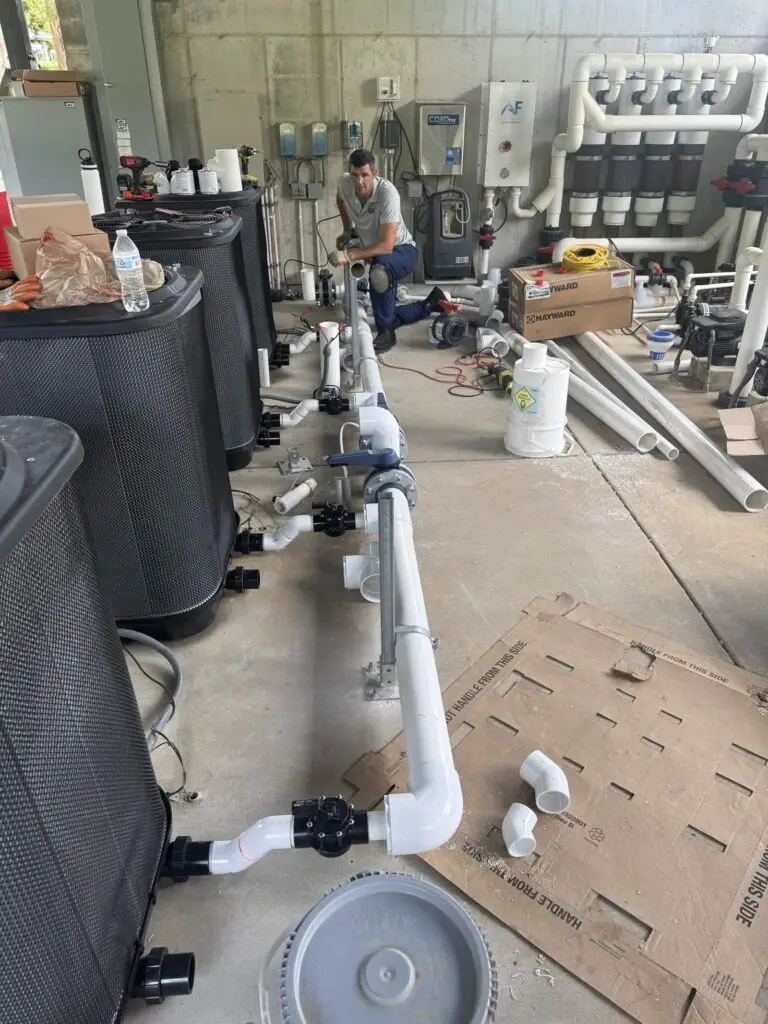
Cartridge, DE and sand filters opened, cleaned and checked when the pressure gauge says it is time.
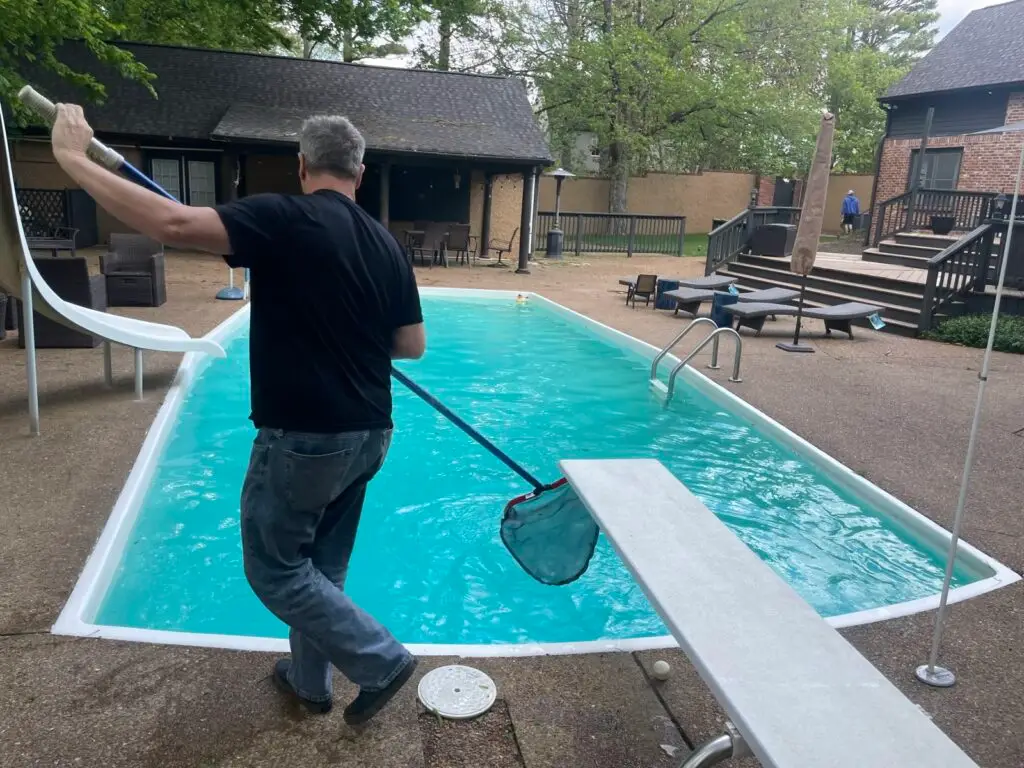
A green, cloudy or neglected pool tested, shocked and filtered back to clear water.
Spring openings and fall winterizing so your pool is ready when the weather is.
Free quote
Same tech, same day, every week. Tell us about your pool and we will get back to you with a free, no-pressure quote. Prefer to talk? Give us a call.
Call or text
Based in
Murfreesboro, TN 37129. Serving Greater Nashville
Hours
Call for hours & availability
Takes less than a minute. Tell us about your in-ground pool and we'll reach out fast with a free, no-pressure quote.
No spam. Fast callback. Or call (629) 247-6255.