 Nashville
Franklin
Brentwood
Nashville
Home / Services / Pool Repairs / Pool Heater Repair
Pool Repairs
Passion Pool Care handles pool heater repair in Nashville for gas heaters and heat pumps. When a heater will not fire, shuts off early or shows an error code, we find the cause and fix it properly.
Local
Greater Nashville based
Reliable
Weekly, like clockwork
Since 2013
Over a decade of pool care
Family Owned
Real people, real care
What's included
In Middle Tennessee, a pool heater does most of its work in spring and fall, stretching the season on both sides of summer, and through winter for a heated spa. That is exactly when it tends to fail. A heater that sat idle all summer gets switched on for a cool April evening or an October weekend and refuses to light, lights and quits, or shows an error code.
A heater is a chain of safety checks. Water has to flow, pressure has to be right, gas or power has to arrive and the control board has to see every sensor report normal. One weak link anywhere stops the whole heater, so a part swap based on a guess often fails to fix it.
Our repair visit starts with the error code, the water flow, the filter pressure and the chemistry. Then we test the ignition, sensors, switches and heat exchanger on Pentair, Hayward, Raypak, Jandy, Zodiac and other major brands. You get a free quote before any parts are replaced. We repair heaters across Davidson, Williamson and Rutherford counties, and below you'll find the most common failures and what each fix involves.
Is it time?
These symptoms usually point to a specific failed part or a flow problem that needs tracing.
01
The heater will not turn on or keeps trying to light and gives up.
02
The heater fires, runs for a minute and then shuts off.
03
An error code or a pressure or flow warning shows on the display.
04
Water is dripping or pooling under the heater cabinet.
05
The heater runs for hours, but the pool or spa barely warms.
06
The heat pump fan runs, but the water never gets warmer.
Heater repairs
Here is how a heater protects itself, what usually breaks and how we decide whether a repair or a replacement makes more sense.
Every pool heater runs through a set of safety checks before it fires. The pressure or flow switch confirms that enough water is moving through the heater. High limit switches shut it down if the water or cabinet gets too hot. On a gas heater, the gas valve opens only after the ignition system proves it can light the burners. If any one of those checks fails, the heater stops and usually shows a code. That design keeps the heater from cooking itself or leaking gas, but it also means one small fault can shut the whole unit down.
A gas heater that will not light usually has a worn igniter, a dirty flame sensor or a gas supply problem. Older heaters use a standing pilot and a thermocouple, while most newer ones use electronic ignition. Igniters weaken with age, and a cracked one never gets hot enough. A flame sensor coated in residue cannot confirm the flame, so the heater shuts the gas off after a few seconds. On the supply side, we check the gas valve, the pressure and the line. A heater that lights for the spa but struggles on a cold morning often has a weak igniter on its way out.
A heater that lights and then shuts off is often reacting to low water flow. The pressure switch lets the heater run only when enough water is moving through it. A dirty filter, a full skimmer basket, a clogged pump basket or a partly closed valve drops the flow, and the heater protects itself. That is why heaters belong downstream of the pump and filter, and why we check the whole circulation path before replacing heater parts. A switch that fails the other way, letting the heater run with no flow, is dangerous and needs immediate repair.
The heat exchanger is the copper or cupronickel coil that moves heat into the water. Corrosive water eats it from the inside. Low pH, low alkalinity and low calcium all make water more aggressive to metal, and chlorine tablets dropped in the skimmer send a stream of concentrated chlorine straight through the heater. Any chlorinator or salt cell should sit after the heater, never before it. The first signs of corrosion are water under the heater, green or blue staining and black flakes in the pool. Once the exchanger leaks, it usually needs replacing, so balanced water is the best protection.
Scale is the opposite problem. Calcium becomes less soluble as water heats, so the hottest surfaces in the system, the heater tubes, are where scale forms first. High pH, high alkalinity or high calcium make it worse. Scale insulates the tubes, so the heater burns more gas or electricity for less heat, and it narrows the water passages until the pressure switch or high limit trips. A heater that runs hot and trips often is a common sign. Keeping the saturation index near zero protects the heater from both scale and corrosion.
A heat pump moves heat from the outside air into the pool using a refrigerant cycle, much like an air conditioner running in reverse. It needs good airflow, a working compressor and a clean coil. A heat pump that hums but will not start often has a failed capacitor. A fan that will not spin, a coil packed with leaves and pollen or a low refrigerant charge all cut its output. Heat pumps also slow down as the air cools, since there is less heat to pull from it. A heat pump that keeps up in May but struggles on a chilly October night may be working as designed.
The display is your best clue. Codes for pressure, flow, high limit, ignition failure or sensor faults each point to a different part of the system. We read the code, confirm it with a meter instead of guessing and repair the cause behind it. Control boards do fail, often after a lightning strike or power surge during a Middle Tennessee summer storm, but they are also blamed for problems that start elsewhere. Testing the sensors and switches first keeps you from paying for a board that was never the problem. A surge protector on the equipment circuit is cheap insurance against the next storm.
Gas heaters deserve respect. Natural gas is lighter than air and drifts away, but propane is heavier than air and can collect in the bottom of a heater that tried and failed to light. If that gas ignites suddenly, it can flash out of the front of the cabinet. If you smell gas at the pad, do not try to relight the heater. Shut off the gas if you can do it safely, leave the area and call your gas company. We check burners, venting and gas connections on every gas heater repair.
Outdoor heaters across Greater Nashville take a beating between seasons. Leaves and pollen pile up in heat pump coils and gas heater cabinets. Mice and insects nest in burner trays and vents over the summer when the heater sits idle, and a nest can block airflow or chew through wiring. Strong winds can blow out a pilot or disturb a burner flame, which is why heaters in exposed spots need clearance or a wind block. Summer thunderstorms also bring power surges. A quick inspection before the first cool evening of fall saves a lot of frustration.
Most of the heat a pool loses goes out through the surface. Evaporation, radiation to the night sky and wind across the water account for about 95 percent of the loss. A cover blocks most of that, and depending on the length of the season, it can cut heating costs by 50 to 70 percent. That matters when a heater seems weak. A heater sized for a covered pool may never keep up with an uncovered one on a windy March night. Before we call a heater faulty, we look at how much heat the pool is losing. Even a simple solar blanket helps on cool spring nights.
Heating takes a lot of energy. Raising one gallon of water by one degree takes about 8.33 BTUs, so warming a 20,000 gallon pool by 10 degrees needs roughly 1.7 million BTUs before any losses. A heater that is too small for the pool will run for hours and never catch up in cool weather, even when nothing is broken. We compare your heater's rating with your pool's size, cover and use. If the real problem is sizing, we tell you plainly rather than replacing parts that are working fine.
Around Nashville, the heater earns its keep at the edges of the season. Many families open in April and close in October, and a heater can add weeks of comfortable swimming on both ends. A heated spa sees use right through winter. Because the heater sits idle through July and August, problems often hide until the first cool evening. A quick check in late summer, before you need heat, catches worn igniters, nests and scale early. If the pool closes for winter, the heater should be drained along with the rest of the equipment, so a hard freeze cannot crack it.
Gas heaters and heat pumps on Greater Nashville pads most often come from Pentair, Hayward, Raypak, Jandy or Zodiac, and we repair all major brands. Each one uses its own error codes, igniters, sensors and boards, so we identify the exact model before ordering parts. We follow each manufacturer's directions for gas pressure, clearances and startup. If a model has been discontinued and parts are hard to find, we tell you that before the repair starts, so you can weigh a replacement.
Most heater problems are worth repairing. An igniter, flame sensor, pressure switch or capacitor costs a fraction of a new heater. Replacement makes more sense when the heat exchanger is leaking on an older unit, the cabinet and burners are badly corroded or parts are no longer available. We look at the age of the heater, its condition and the cost of the repair, then give you a free quote for both options. You decide, and there is no pressure either way. If you replace it, we also check the gas line, venting and pad clearances, because those can change the cost.
How it works
1
Call (629) 247-6255 or send the form with the heater brand, the error code and what it is doing.
2
We check flow, chemistry, ignition and sensors, trace the fault and quote the repair before any work.
3
We make the repair, run the heater up to temperature and retest the water before we leave.
FAQ
Still have a question? Call or text (629) 247-6255.
It depends on how it is used and how the water is kept. Balanced water is the biggest factor, because corrosive water eats the heat exchanger and scale chokes it. Yearly checks before the heating season also add years.
It depends on the pool size, the heater and the weather. Warming 20,000 gallons by 10 degrees takes about 1.7 million BTUs, before losses to wind and evaporation. A cover shortens the wait considerably.
It depends on which part failed and the heater model, so we give a free, no-obligation quote after we diagnose it. Call (629) 247-6255 to set up a visit.
A heat pump uses a refrigerant cycle to pull heat from the outside air and pass it into the pool water, much like an air conditioner in reverse. It works best when the air is mild and slows down as the air cools.
That depends on the pool's volume, how fast you want it to warm and how much heat it loses. Each gallon needs about 8.33 BTUs per degree, and an uncovered pool on a windy night needs far more. We size heaters to the pool.
The most common causes are low water flow tripping the pressure switch, a dirty flame sensor, a weak igniter or a gas supply problem. We check flow and the filter first, because they cause many shutdowns.
The spa holds a few hundred gallons, so it warms quickly, while the pool holds many thousands and loses heat across a much larger surface. A heater that is undersized, scaled up or short on flow may manage the spa but not the pool.
It confirms enough water is flowing through the heater before it lets the heater fire. Low flow from a dirty filter or full basket opens the switch, and the heater shuts down to protect itself.
Check that the pump is running and the filter is clean, then look for an error code. No power, a tripped switch, a failed igniter or a closed gas valve are common causes. We test each one in order.
Yes. A heater firing without flow can overheat and damage itself or nearby equipment. Turn it off at the switch and call us. A failed or bypassed pressure switch is the usual cause.
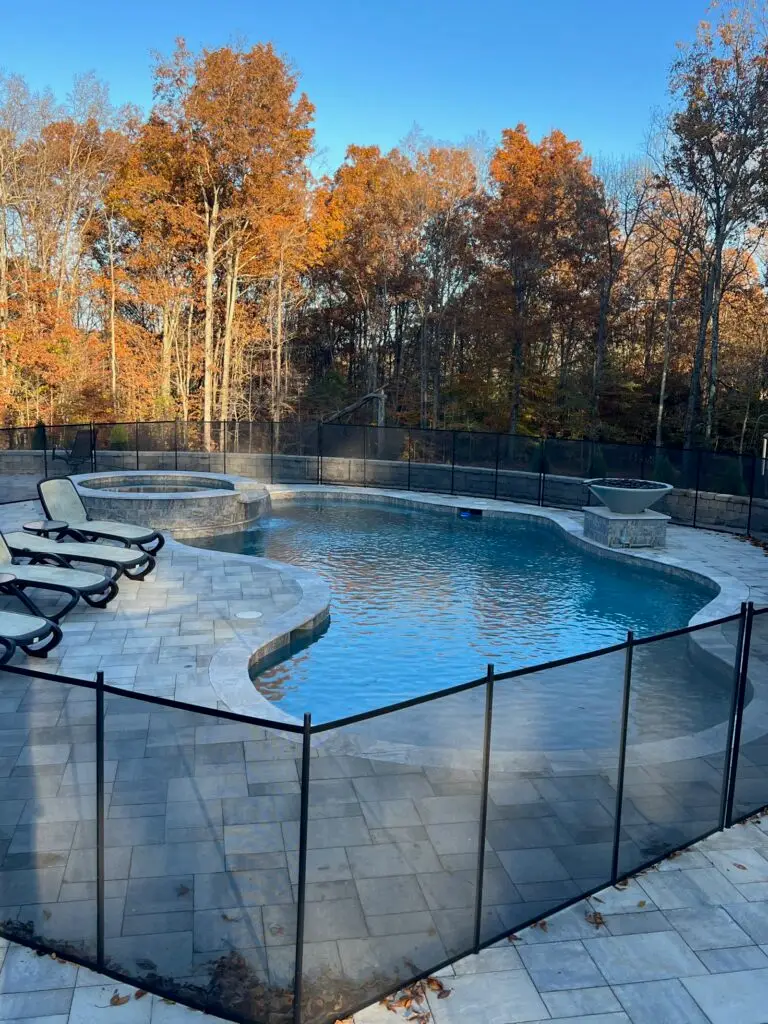
Gas heaters and heat pumps sized to your pool and spa, installed and fire tested.
Humming motors, lost prime, leaking shaft seals, noisy bearings and variable-speed faults repaired.
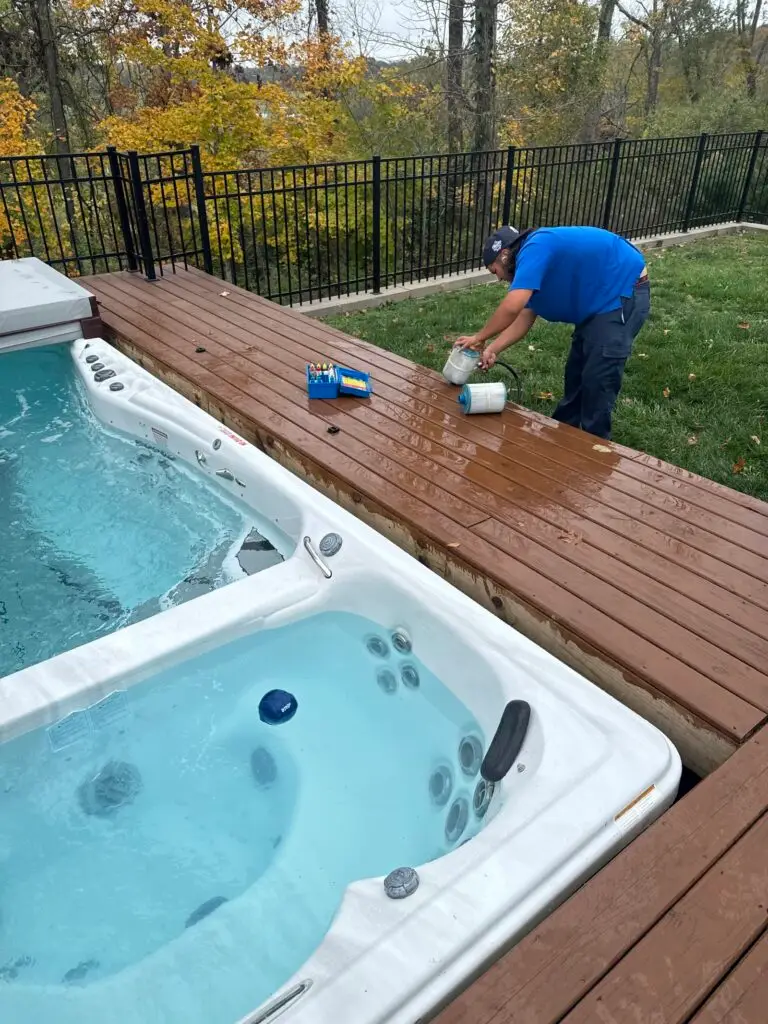
Spa and hot tub jets, valves, blowers, controls, leaks, pumps and heaters repaired.
Free quote
Send us a message for a free, no-pressure pool heater repair quote anywhere in Greater Nashville. Prefer to talk? Call (629) 247-6255.
Call or text
Based in
Murfreesboro, TN 37129. Serving Greater Nashville
Hours
Call for hours & availability
Takes less than a minute. Tell us about your in-ground pool and we'll reach out fast with a free, no-pressure quote.
No spam. Fast callback. Or call (629) 247-6255.