 Nashville
Franklin
Brentwood
Nashville
Home / Services / Pool Cleaning / Pool Tile Cleaning
Pool Cleaning
Passion Pool Care handles pool tile cleaning in Nashville without draining your pool. We remove calcium scale, scum lines and stains from waterline tile, spillways and rock, then rebalance the water so the band comes back slowly.
Local
Greater Nashville based
Reliable
Weekly, like clockwork
Since 2013
Over a decade of pool care
Family Owned
Real people, real care
What's included
The band shows up slowly. First comes a dark scum line from sunscreen, pollen and leaf tannins, then a white or gray crust that a brush will not move. It creeps onto the spa spillway and the rock waterfall. A pumice stone takes an afternoon and can scratch the glaze, and household vinegar barely touches it.
Every Nashville summer adds a layer. Hot weather means steady evaporation, and evaporation leaves calcium behind. When pH, alkalinity or calcium run high, that calcium settles on the tile a little each day. Our pool tile cleaning service lowers the water just below the tile line and cleans the waterline tile, spa dam walls, spillways and rock with a method matched to each surface, glass tile included.
Loosened scale and debris are vacuumed out, the pool is refilled and the chemistry is rebalanced so the band returns slowly. We serve pools across Davidson, Williamson and Rutherford counties. Below, you'll find the signs your tile needs attention, what the deposit is made of, how we remove it safely and how to keep it from coming back.
Is it time?
Tile scale is easiest to remove while it is still white and chalky, before it turns gray and glassy.
01
A white, gray or dark band runs along your waterline tile.
02
Crusty deposits build on the rock waterfall or spa spillway.
03
The tile feels rough enough to catch a fingernail.
04
Calcium on the tile will not shift with a stiff brush.
05
Scale shows on the pool steps and the salt cell at the same time.
06
The tile line has not been cleaned since the pool was built.
Tile know-how
Here is what builds up on Nashville pool tile, how we remove it without harming the surface and how to slow the next layer down.
Two things build at the waterline. The first is organic. Sunscreen, body oils, pollen and tannins from oak and maple leaves collect where the water meets the tile and leave a dark scum line. The second is mineral. Evaporation through a hot Nashville summer takes only pure water and leaves calcium behind, and every top-off brings in more. Where water splashes and dries on warm tile, calcium settles out, faster when pH and alkalinity run high. Over a few seasons, those two layers bond into the band you see today.
The white, flaky, chalky deposit that appears first is calcium carbonate. It forms when pH, alkalinity, calcium or temperature run high, and it comes off fairly easily. It fizzes when acid touches it, which makes for a simple field test. The gray, hard, glassy deposit is calcium silicate. It builds slowly over years, usually where carbonate scale was never removed, and acid barely touches it. Silicate takes more time and a different method to remove. Knowing which one is on your tile decides how we clean it, so we test before we start. Many older Nashville pools carry both, with silicate underneath and carbonate on top.
Pool water can hold only so much calcium before it starts dropping out. That tipping point depends on five things together: pH, total alkalinity, calcium hardness, water temperature and total dissolved solids. The saturation index combines them into one number. Between minus 0.3 and plus 0.3, the water is balanced. Above plus 0.3, it is scale-forming, and calcium settles on tile, plaster and heater parts. Unlike most chemicals, calcium becomes less soluble as water warms, which is why tile lines grow fastest in July. Keeping the index near zero is the most important thing you can do for your tile. We work it out from your test results, so we can adjust the water before scale has a chance to start.
A pool loses water every day to evaporation, splash-out and the backwash hose. Evaporation removes only water, so the calcium and other minerals stay behind and concentrate over the season. The water you add to replace it brings its own calcium. Source water from wells and aquifers tends to carry more calcium than surface water, so homes that fill from a private well may see scale sooner. Hot, windy summer days speed evaporation, and the waterline is where the drying happens. That is why the band is always thickest right where the water meets the tile.
There is no single right tool for every pool. A tile brush and a pool tile cleaner handle the scum line and light carbonate scale. Pumice stones and scrapers work slowly and can scratch ceramic and glass tile, which gives the next layer a rougher surface to grip. Acid dissolves carbonate scale but can etch glass tile and natural stone. For heavy silicate scale, specialized media blasting is sometimes the only answer, and we will tell you honestly if your tile has reached that point. The goal is always to remove the deposit and keep the glaze intact.
The pool is not drained for a tile cleaning. We lower the water a few inches, just below the tile line, so the whole band can be worked from the deck. On a spa, the level drops below the dam wall and spillway. Draining a pool to clean tile would waste thousands of gallons and put the shell at risk. An empty pool has nothing pushing back against the ground, and Middle Tennessee clay soil can hold groundwater against the shell after heavy rain. Afterward, the pool refills and the chemistry is rebalanced.
Waterline tile around Nashville ranges from classic glazed ceramic to glass mosaic and natural stone coping. Each one needs a different touch. Glazed ceramic tolerates careful scrubbing, but the glaze is what keeps scale from gripping, so we never grind through it. Glass tile scratches easily and dulls under abrasives or strong acid. Natural stone, such as travertine or flagstone, can etch and lose its finish when acid touches it. Before we start, we identify the surface and test a small area. A non-abrasive approach is always the first choice, because a scratched surface scales faster next time.
The worst scale on many pools is not on the waterline at all. Spa spillways, dam walls and rock waterfalls stay wet, then dry in the sun, over and over. Each cycle leaves a thin film of minerals behind, and over a summer those films stack into crusty white sheets. Rock features add another challenge, because the uneven surface traps deposits in every crack. We clean these areas by hand with a method matched to the stone or tile, then rinse them well. Running water features while the water is balanced keeps them cleaner between visits.
Not every dark line is scum. Copper, iron and manganese can stain tile and plaster blue-green, reddish brown or nearly black. Those metals come from source water, corroded heater parts or certain algicides, and low pH makes the problem worse. Leaves add their own brown tannin stains, which often lighten with chlorine. Metal stains need a different approach. A chelating or sequestering agent binds the metals so they stop depositing, and then the water has to be balanced. We identify the stain before we treat it, so we do not scrub harder at a problem that needs chemistry. If the metals come from a corroding heater, that heater needs attention too, or the stains will keep coming back.
Salt pools are popular across Brentwood and Franklin, and they tend to scale a little faster. A salt cell makes chlorine from dissolved salt, and the same process pushes pH upward. Higher pH tips the water toward scale, both on the tile and on the cell plates. That is why scale often shows on the steps and the salt cell at the same time. Keeping pH at 7.4 to 7.6 and watching alkalinity are the keys on a salt pool. A cell that is caked with scale also makes less chlorine, so tile scale can be an early warning for a cell that needs service.
Scale forms when water holds more calcium than it can keep dissolved. Holding pH at 7.4 to 7.6, alkalinity in the right range for your chlorine and calcium hardness at 200 to 400 ppm keeps the water close to balance, where it neither etches plaster nor leaves scale. Brushing the tile line every week wipes off fresh deposits before they harden. A steady water level helps, too, because a level that rises and falls widens the band. In hard water, a scale-control product that keeps calcium in solution can slow buildup further.
Cleaning the tile should never create a new problem in the water. Any cleaner or acid that reaches the pool lowers pH and alkalinity, and loosened scale settles on the floor. So we work in sections, keep products off the plaster where we can and vacuum out the debris when we finish. Once the pool is refilled, we test and adjust pH, alkalinity and calcium so the fresh water starts balanced. Skipping that last step is how a clean tile line turns into etched plaster or a new band within weeks.
Most tile lines clean up well, even after years of neglect. A few are past saving. Silicate scale left for a decade can bond so tightly that removing it damages the glaze underneath. Tiles can also crack, loosen or lose their grout, often from freeze and thaw cycles over Middle Tennessee winters. When we see that, we tell you plainly before any work starts, so you are not paying to clean tile that needs replacing. For most pools, a cleaning plus balanced water is all it takes to bring the tile line back.
Each season leaves its mark on the tile. A spring opening often reveals the band that built up under the cover and last fall's leaf stains, which makes it a good time for a cleaning. Summer is peak scale season, with heat, evaporation and constant top-offs. Fall brings tannin stains from oak and maple leaves across Belle Meade, Forest Hills and Green Hills. In winter, a pool that stays open still needs balanced water, because scale keeps forming whenever the index runs high. A cleaning before the swim season starts keeps the band thin all summer.
How it works
1
Call (629) 247-6255 or send a photo of your tile line, and we will give you an honest quote.
2
We lower the water below the tile line and clean the tile, spillways and rock with the right method.
3
We refill the pool and rebalance the water so the band comes back as slowly as possible.
FAQ
Still have a question? Call or text (629) 247-6255.
It depends on the type of scale. Soft, white calcium carbonate comes off with a tile cleaner and careful brushing. Hard, gray calcium silicate needs a slower, specialized method. Either way, the water must be rebalanced afterward or the scale returns.
Yes. We lower the water just below the tile line, clean the band from the deck and refill. Draining is never needed for tile cleaning and would put the shell at risk.
Gently. Glass tile scratches easily, so we skip pumice and harsh abrasives and use non-abrasive cleaners and soft tools. Strong acid can dull the surface, so we test a small area first.
A pressure washer lifts loose dirt, but it rarely moves hardened calcium, and a strong jet can wear grout. Scale needs the right cleaner or method for the tile type.
It depends on the length of the tile line, the type of scale and any spillways or rock features, so we give a free, no-obligation quote. Send a photo or call (629) 247-6255.
Usually calcium carbonate scale. It forms when evaporation and high pH, alkalinity or calcium push calcium out of the water at the waterline. A drop of acid makes it fizz.
It can be, when done at low pressure with the right media by an experienced technician. It is usually saved for heavy scale that gentler methods will not move. We will tell you if your tile needs it.
It helps, but balance matters more. Calcium can only be lowered by replacing water, so the usual fix is to keep pH and alkalinity lower so the saturation index stays near zero.
The water is likely scale-forming. High pH, high alkalinity, hard fill water, summer heat and a salt cell pushing pH up all speed it along. Weekly brushing and balanced water slow it down.
It is best avoided. Pumice can scratch glazed tile and will damage glass tile. A scratched surface gives the next layer of scale a better grip, so it builds back faster.
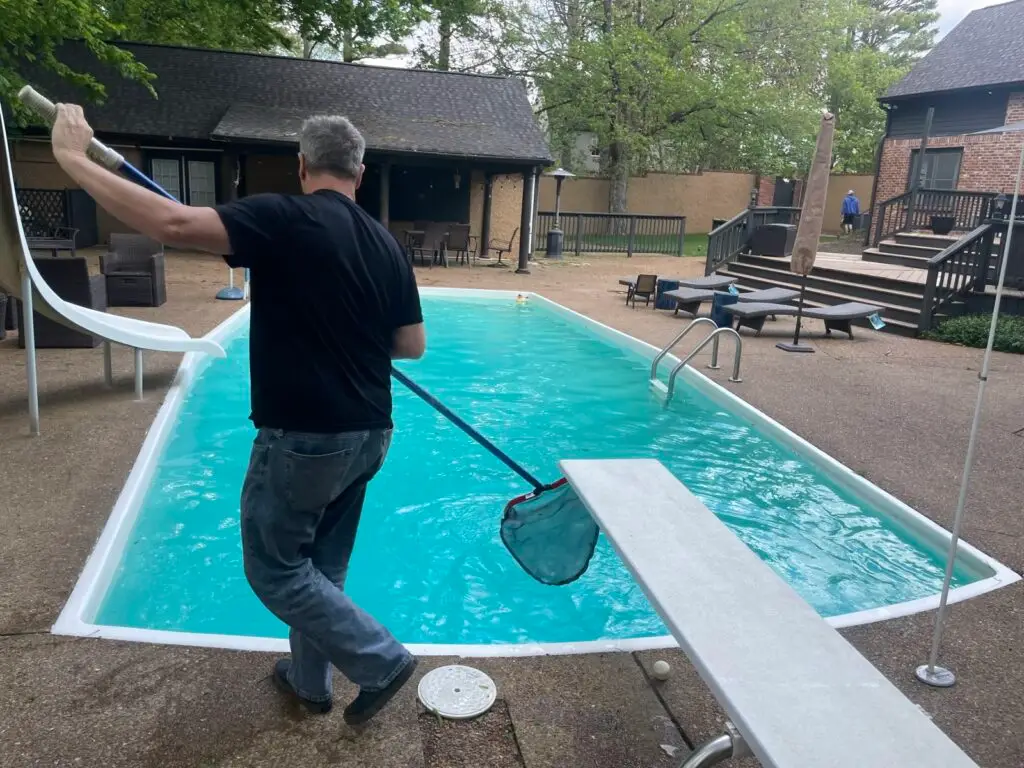
A set day every week, with the tile line brushed and the water balanced to slow scale.
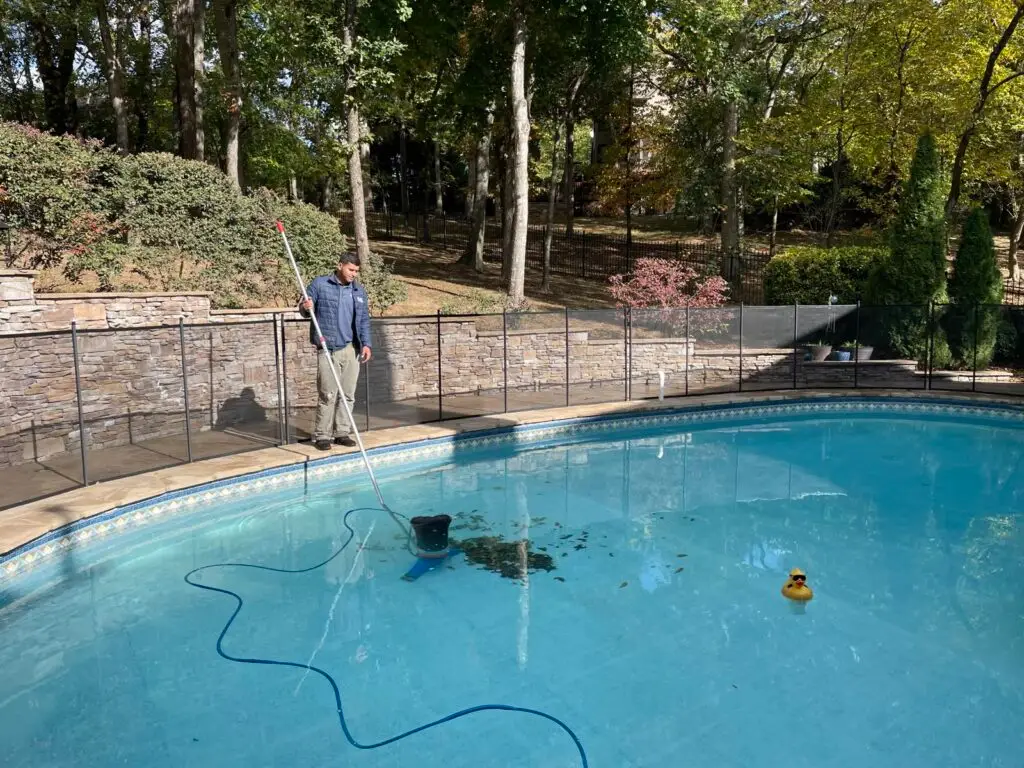
Stained or scaled plaster washed in sections, neutralized and refilled with balanced water.
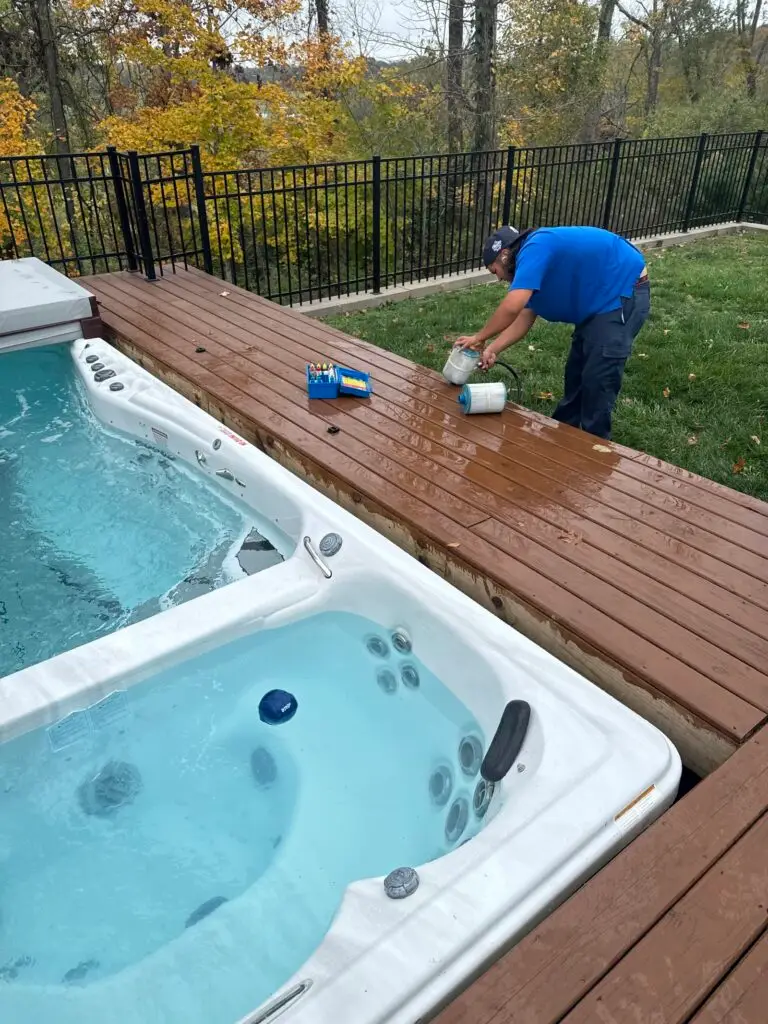
Spa water balanced on its own, jet lines flushed, shell scrubbed and filter cleaned on every drain.
Free quote
Send us a photo of your tile line, and we will give you a free, no-pressure quote. Prefer to talk? Call (629) 247-6255.
Call or text
Based in
Murfreesboro, TN 37129. Serving Greater Nashville
Hours
Call for hours & availability
Takes less than a minute. Tell us about your in-ground pool and we'll reach out fast with a free, no-pressure quote.
No spam. Fast callback. Or call (629) 247-6255.