 Nashville
Franklin
Brentwood
Nashville
Home / Services / Pool Repairs / Pool Filter Repair
Pool Repairs
Passion Pool Care handles pool filter repair in Nashville for cartridge, DE and sand filters. We trace the leak or failure to the part that caused it, fix it properly and tell you honestly when a filter is past repair.
Local
Greater Nashville based
Reliable
Weekly, like clockwork
Since 2013
Over a decade of pool care
Family Owned
Real people, real care
What's included
A broken filter usually shows up as water in the wrong place. A drip at the clamp band turns into a spray. Water runs out the backwash line while the valve is set to filter. DE powder or sand appears on the pool floor, or the pressure gauge has not moved in a year.
A pool filter is a pressure vessel, and pressure finds every weak part. A leaking valve can send water to waste all week, so the pool never holds its level. Torn grids and broken laterals let dirt and media back into the pool. Worse, a lid or clamp that sits badly can separate under pressure, which is why our filter work starts with the pump off and the air released.
We check the lid o-ring, clamp band, air relief, gauge, manifold, grids or cartridges, laterals and valve. We replace worn parts with ones matched to your Pentair, Hayward, Jandy, Zodiac or other brand filter, then pressure test the system and record its clean pressure. Our team repairs filters across Davidson, Williamson and Rutherford counties. Below, you'll find the signs of a failed part and what each repair involves.
Is it time?
A cleaning fixes a dirty filter. These symptoms point to a failed part that a cleaning will not fix.
01
Water is leaking from the clamp band, lid or tank seam.
02
Water keeps flowing out of the backwash line while the valve is set to filter.
03
DE powder or sand blows back into the pool after the filter runs.
04
The pressure gauge is stuck or reads zero with the pump running.
05
Air bubbles keep coming out of the pool returns.
06
The filter tank is bulging, discolored or cracked near the base.
Filter repairs
Here is how we find and fix the most common filter failures we see around Nashville, and how we decide when a filter is worth repairing.
A pool filter holds water under pressure every minute the pump runs. Opening it under pressure, loosening the clamp or turning the valve can blow the lid off with real force. Serious injuries happen this way every year. That is why every filter repair starts with the same steps. We shut off the pump, open the air relief valve and let the pressure drop to zero before we touch the clamp or valve. When the job is done, we bleed the air out again as the system restarts. If your clamp band is rusted or the lid does not seat cleanly, do not run the filter until someone checks it.
Most filter leaks start at the seam where the two halves of the tank meet. A large o-ring sits in that seam, and the clamp band or locking ring holds it tight. After a few Middle Tennessee summers, the o-ring flattens and cracks, and the band can corrode or lose tension. We fit a new o-ring matched to your filter, lubricate it with a pool-safe lubricant and seat it evenly. Then we check the band for rust and fatigue. A drip at the seam that you can ignore in May often becomes a steady spray by August, so it is worth fixing early.
If water leaves through the backwash line while the valve is set to filter, the multiport valve is leaking inside. The usual cause is the spider gasket, the star-shaped seal that separates the ports. It wears, tears or traps a grain of sand, and water slips to the waste port. A pool that drops steadily with no visible leak at the pad often has this problem. If a new gasket keeps failing, the valve body itself may be scored or cracked, and the whole valve needs replacing. We also check the o-rings where the valve meets the tank, a common source of drips on top-mount sand filters.
Not every filter has a multiport valve. Many cartridge and DE filters use a slide or push-pull valve, sealed with o-rings that dry out and crack over time. Unions and threaded fittings at the filter inlet and outlet loosen as the pad heats and cools through the seasons. A small leak on the pressure side sprays water when the pump runs. A leak on the suction side, before the pump, can pull air in instead, which shows up as bubbles at the returns. We trace each drip to its source, replace worn seals and tighten or replace fittings without overtightening plastic threads. Leaks that look small at the pad can still cost a lot of water over a Nashville summer, so they are worth fixing early.
A white cloud at the return jets after a backwash means DE powder is getting through the filter. A torn grid, a cracked grid frame, a broken manifold or a bad manifold gasket can all leave a gap. We pull the grid assembly and inspect every grid, because a small tear often hides until the grid is held up to the light. Oils and minerals forced into the cloth also wear grids out over time. We replace damaged grids and manifolds with parts that match your filter, then recharge it with the right amount of fresh DE before it goes back into service.
Sand on the pool floor near the returns points to broken laterals. These are the slotted fingers at the bottom of a sand filter that let water out while keeping sand in. They crack with age or during a rough sand change, and one broken lateral passes sand every time the pump runs. Sand filter repair means emptying the tank, replacing the laterals and checking the standpipe, then refilling with fresh media. Because the old sand has to come out anyway, this is often the right time for a full sand change. Sand that only appears for a moment after a backwash may simply need a longer rinse cycle.
Cartridge filters have the fewest parts. A cartridge with a cracked end cap or split band lets dirty water bypass the fabric, and a cartridge that has collapsed has run too long past its cleaning pressure. Neither can be repaired, so we replace the cartridge with one sized for your filter. We also check the center core, the tank o-ring and the internal standpipe for cracks. If cartridges keep failing early, we look for the cause, such as a filter that is too small for the pump or cleanings that use acid before degreaser. Filters that hold two or four cartridges work best when every element is replaced together. That way, the flow divides evenly across all of them.
The air relief valve on top of the filter lets trapped air out and lets pressure drop safely before service. When it sticks, air builds up inside the tank and the filter loses capacity. The pressure gauge is how anyone knows when the filter needs cleaning, so a stuck or broken gauge leaves you guessing. Steady bubbles at the returns usually mean air is getting in before the pump, from a low water level, a clogged skimmer basket or a worn o-ring on the pump lid. We replace failed valves and gauges and trace air leaks to the real source.
A crack in the tank body is different from a worn seal. Plastic tanks age under years of pressure cycles and sun, and a hairline crack near the base or around the valve opening can grow without warning. A bulge or discolored patch means the tank wall is weakening. Never patch a cracked pressure tank and put it back into service, because it can fail violently. In that case, we replace the tank or the whole filter, and we tell you which makes more sense for the age and size of your equipment.
Most Nashville winters are mild, but a hard freeze can still split a filter that was left full of water. Water expands as it freezes and cracks tanks, valve bodies, gauges and drain plugs. The damage often goes unnoticed until the pump starts again in spring and water sprays from the pad. If your pool runs through winter, the pump needs to keep water moving on freezing nights. If the pool is closed, drain the filter and leave the drain plug and air relief open. After a hard freeze, look for cracks and drips before running the system for long. A lost drain plug is far easier to replace than a cracked tank.
Every pool loses some water to evaporation, splash-out and backwashing, and a hot Nashville July can take a noticeable amount on its own. A filter leak adds to that quietly. A drip at a union or a valve leaking to waste can drain more water each week than evaporation, and the fresh water you add throws off the chemistry. If your pool level drops faster with the pump running than with it off, the leak is likely on the pressure side, at or after the filter. We check the filter and its valves first, because that is where many of these leaks start. A simple bucket test can help confirm the loss.
Filter parts are not universal. O-rings, gaskets, grids, laterals and cartridges are sized to each model, and a near match can leak or let media through. The filters on most Greater Nashville pads come from Pentair, Hayward, Jandy or Zodiac, and we repair all major brands. We identify the exact model before ordering parts and follow the manufacturer's directions for reassembly and pressure. If a model has been discontinued and parts are no longer available, we tell you that up front instead of forcing a repair that will not last.
Most filter problems are worth repairing. An o-ring, spider gasket, gauge, lateral or grid costs a fraction of a new filter and can add years of service. Replacement makes more sense when the tank is cracked, parts are discontinued, the filter is too small for the pump, or several major parts are failing at once. We look at the age of the filter, the condition of the tank and the cost of the repair, then give you a free quote for both options. You make the call, and there is no pressure either way. Whatever you choose, you get a straight answer.
How it works
1
Call (629) 247-6255 or send the form and tell us where the water, sand or DE is showing up.
2
We depressurize the filter, open it up and trace the problem, then quote the repair before any work.
3
We replace the worn parts, reassemble the filter and pressure test it before we leave.
FAQ
Still have a question? Call or text (629) 247-6255.
Most leaks come from a worn tank o-ring at the clamp band, a leaking valve or loose unions at the inlet and outlet. A crack in the tank itself is less common but more serious. We trace the leak to its exact source before quoting a repair.
Watch for water leaking at the pad, water running out the backwash line on the filter setting, sand or DE in the pool, a gauge that never moves and a tank that is cracked or bulging.
It depends on the type and the care it gets. Filter sand usually lasts 5 to 15 years, while o-rings, gaskets, grids and cartridges wear out sooner. Balanced water and timely cleanings help every part last longer.
No. A cracked tank is a pressure vessel that can fail violently, so it needs replacing. Patching is not safe. We will quote a new tank or a full filter replacement, whichever makes more sense.
It depends on which part failed and your filter model, so we give a free, no-obligation quote after we see it. Call (629) 247-6255 to set up a visit.
The multiport valve is leaking inside, usually through a worn or torn spider gasket. Replacing the gasket fixes most cases. If it keeps failing, the valve body may be damaged and need replacing.
A little sand right after a backwash can mean someone skipped or shortened the rinse cycle. Sand that keeps showing up near the returns usually points to a broken lateral at the bottom of the filter.
The gasket may be the wrong size, debris may be holding it open or the valve body may be worn or cracked. When a correctly fitted gasket keeps failing, the valve itself usually needs replacing.
On top-mount sand filters, the o-ring between the valve and the tank wears out and the clamp can loosen. With the pump off and pressure released, we replace the o-ring and reseat the valve.
Air is usually getting in before the pump, from a low water level, a clogged skimmer basket or a worn pump lid o-ring. A stuck air relief valve on the filter can add to it. We trace the leak and fix the source.
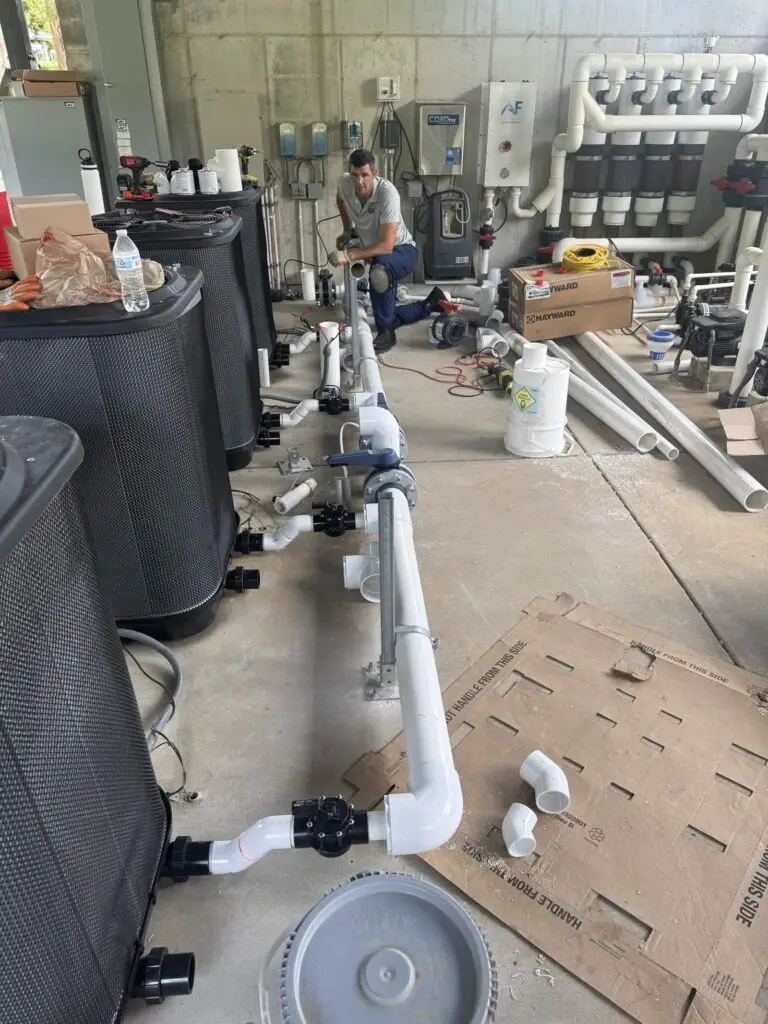
Cartridge, DE and sand filters opened, cleaned and checked when the pressure gauge says it is time.
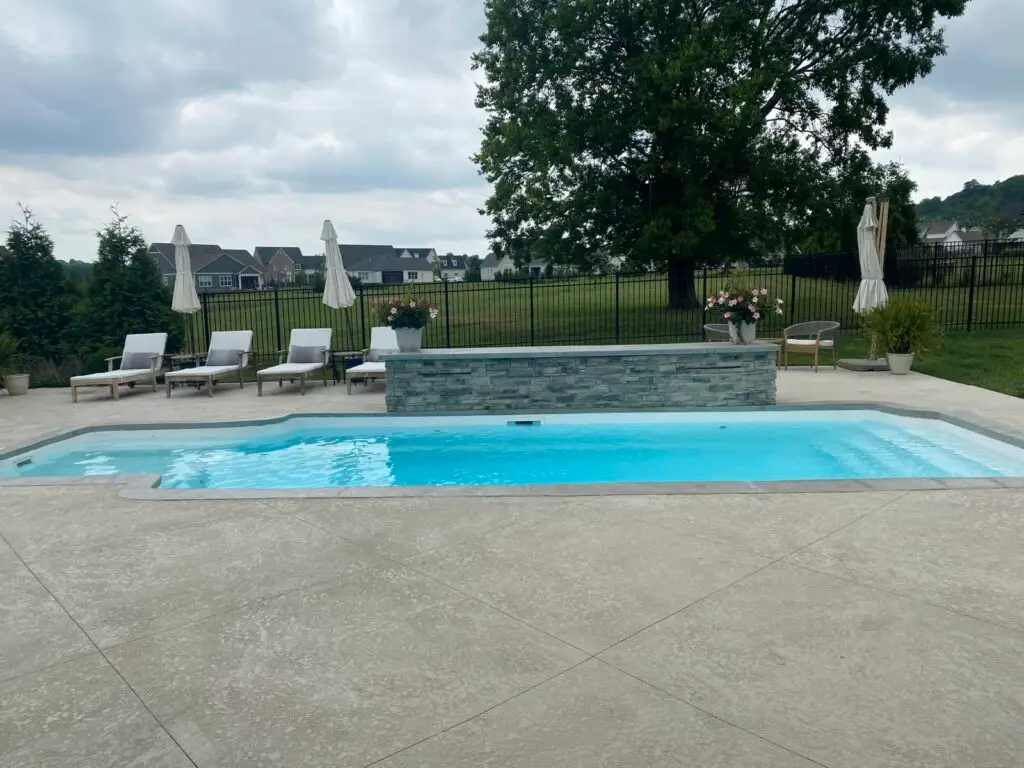
Cartridge, DE or sand filters sized to your pump, plumbed with unions and pressure tested.
Humming motors, lost prime, leaking shaft seals, noisy bearings and variable-speed faults repaired.
Free quote
Send us a message for a free, no-pressure pool filter repair quote anywhere in Greater Nashville. Prefer to talk? Call (629) 247-6255.
Call or text
Based in
Murfreesboro, TN 37129. Serving Greater Nashville
Hours
Call for hours & availability
Takes less than a minute. Tell us about your in-ground pool and we'll reach out fast with a free, no-pressure quote.
No spam. Fast callback. Or call (629) 247-6255.