 Nashville
Franklin
Brentwood
Nashville
Home / Services / Specialty Services / Pool Sand Changes
Specialty Services
Passion Pool Care handles the pool sand change in Nashville for sand filters that no longer keep the water clear. We replace worn sand with the right media, inspect the laterals and backwash the filter clean.
Local
Greater Nashville based
Reliable
Weekly, like clockwork
Since 2013
Over a decade of pool care
Family Owned
Real people, real care
What's included
The water stays hazy even right after a backwash. The pressure gauge climbs back up within days, or it barely moves at all. You backwash more and more often, and the pool still looks dull. When a sand filter acts like this, the sand itself is usually worn out or caked, and no amount of backwashing will bring it back.
Old sand does not filter well. New filter sand has sharp edges that catch dirt, and over the years those edges wear smooth. Oils and minerals can also glue the sand into clumps, so water cuts channels through it and skips the filtering. Fresh sand restores the filter's ability to trap fine particles and gives you clear water again.
Our sand change starts with the filter's label, so we use the right media and the right amount. We shut the system down safely, remove the old sand, inspect the laterals and distributor and replace any broken parts. Then we refill with #20 silica sand or the media your filter calls for and backwash until the water runs clear. Our team works across Davidson, Williamson and Rutherford counties. Below, you'll find when to replace sand in pool filter tanks and how we do it right.
Is it time?
Backwashing fixes a full sand filter, but these signs usually mean the sand itself needs replacing.
01
The water stays cloudy even right after you backwash.
02
Pressure climbs back up within days of a backwash.
03
The gauge barely moves while the water stays dull.
04
Sand shows up on the pool floor near the returns.
05
The sand has not been changed in many years.
06
The pool went green and the filter never quite caught up.
How it works
Here is how a sand filter works, why sand wears out and what a proper sand change includes.
Water enters the top of a sand filter, spreads across the sand bed and flows down through it. Dirt catches on the sharp edges of the sand grains and in the tiny gaps between them. As those gaps fill, the filter traps smaller and smaller particles. Right after a backwash, it catches larger dirt, and by the end of a cycle it can catch particles around 25 microns. Clean water then passes through slotted laterals at the bottom and returns to the pool. The process only works when the sand is sharp and evenly packed.
Filter sand is considered a long-lasting media, but it does not last forever. Most sand needs replacing every 5 to 15 years, depending on how hard the filter works. Under a microscope, new sand has sharp, jagged edges, while old sand looks smooth and rounded. Smooth grains hold less dirt, so more of it passes back into the pool. Nashville pools that deal with heavy pollen, leaves and summer storms put more load on the sand, which can shorten its life. Age alone is not the only sign, so we look at how the filter is performing.
Sand can fail in other ways before it wears smooth. Body oils, lotions and fine dirt can coat the grains and bind them into clumps called mudballs. Some flocculants and clarifiers can fill the gaps between grains, which helps for a while but can glue the bed into a hard mass. Minerals can also cement the sand together. Once the bed cakes, water cuts channels through the weak spots and skips the filtering entirely. Pressure may look normal while the water stays cloudy. A sand change fixes all of these problems at once.
Most residential sand filters call for #20 silica sand. Its grains pass through a screen with 20 wires per inch but stop on one with 30, which makes them small enough to trap dirt and large enough to stay put. Using the wrong sand causes trouble. Sand that is too fine can slip through the laterals into the pool, and sand that is too coarse lets dirt pass. Play sand and construction sand are never a substitute. We check your filter's label and use the media its manufacturer specifies, so the filter works the way it was designed to work.
Every sand filter has a label that lists how much sand it holds. That amount leaves an open space above the sand called freeboard, usually about half the depth of the sand bed. Freeboard lets the sand lift and expand during a backwash, so dirt can rinse out. Too much sand fills that space, which can push sand out to waste and make backwashing less effective. Too little sand leaves a thin bed that filters poorly. We measure carefully and fill to the manufacturer's amount, never by guesswork.
At the bottom of the tank sits the underdrain, a set of slotted arms called laterals. The slots let water out but hold the sand in. Over the years, laterals can crack, especially after high pressure or careless sand removal. A single broken lateral lets sand flow into the pool, where it collects near the returns or on the floor. A sand change is the best time to inspect them, since the tank is empty. We check each lateral and replace any that are cracked, so the new sand stays where it belongs.
We start by turning off the pump and opening the air relief to release pressure. Then we drain the tank, remove the valve or top and take out the old sand. Care at this step protects the laterals. Once the tank is empty, we rinse it, inspect the laterals and standpipe and replace any damaged parts. We partly fill the tank with water to cushion the laterals, then add the new sand and level it. Finally, we reassemble the filter with fresh o-rings where needed and get it ready for the first backwash.
A sand filter runs under pressure, and that pressure can cause serious injury if it is released the wrong way. Before anyone changes a valve or removes a clamp or lid, the pump must be off and the air relief valve open. Skipping that step can make parts separate violently. Dry silica sand also gives off fine dust when it is poured, and that crystalline silica dust should not be breathed. We pour carefully, keep the dust down and protect ourselves while we work.
New sand carries a small amount of fine dust from processing. If those fines stay in the filter, oils stick to them and mudballs form sooner. So new sand needs a series of backwashes at startup, watching the sight glass until the water runs clear. Then a short rinse settles the bed before the filter goes back to normal filtering. We record the clean starting pressure once it settles, because every future backwash is measured against that number. Expect the pool to look clearer within a few days as the new sand loads.
A sand filter actually filters better as it loads, because the gaps between grains get smaller. Backwashing on a fixed schedule throws that away and can leave the water cloudy over time. The better rule is to backwash when the pressure rises 8 to 10 psi above the clean starting reading. Then run the backwash until the sight glass shows clear water. Turning the pump off before moving the valve protects the valve and you. If you are on our weekly route, we read the gauge on every visit and backwash when it is time.
Sometimes the sand can be saved. A filter sand cleaner can soak loose oils and minerals from a bed that is still in good shape, and removing the top inch or two of dirty sand can help a blocked bed. That makes sense when the sand is fairly new and the problem is buildup. When the grains have worn smooth, have caked into a hard mass or have been in the tank for many years, cleaning only buys a little time. In that case, fresh sand is the better value, and we tell you which one fits.
Silica sand is the standard, but it is not the only media. Some owners choose recycled glass media, which has sharp edges and filters well in many filters. Zeolite is a mineral media that some owners use as an alternative too. Each one behaves a little differently during backwash and needs its own fill amount. Your filter's manufacturer is the best guide, since some filters are designed only for sand. We explain the options during your quote and install the media that suits your filter and how you care for your pool.
Most Middle Tennessee winters are mild, but a hard freeze can crack a sand filter that sits full of water. If your pool runs through winter, the pump has to keep water moving on freezing nights. If you close the pool, the filter needs to be drained by removing its drain plug, with the valve set the way the manufacturer directs for winter. Many owners plan a sand change around opening or closing, when the system is already being worked on. We can do the sand change as part of either visit.
A sand change fixes the media, but it cannot fix a failing tank. If the tank is cracked, the valve is leaking badly or parts are no longer made, new sand will not solve the problem. We check the tank, valve and gauge during every sand change. If the filter is near the end of its life, we tell you before we start, so you can choose between a sand change now and a new filter instead. That way you do not spend money on sand for a tank that is about to fail.
How it works
1
Call (629) 247-6255 or send the form with the filter model or a photo of its label.
2
We look at the filter, the sand and the valve and give you a free, no-pressure quote.
3
We replace the sand, inspect the laterals and backwash until the water runs clear.
FAQ
Still have a question? Call or text (629) 247-6255.
It depends on the filter size, the media you choose and whether any laterals or parts need replacing. We check the filter first and give you a free, no-obligation quote. Call (629) 247-6255 to set it up.
Check the label on the filter tank, which lists the exact amount. That amount leaves the right open space above the sand for backwashing, so it is worth following closely.
Most residential sand filters use #20 silica pool filter sand. Never use play sand or construction sand, which can pass into the pool or clog the filter.
Turn off the pump, set the valve to backwash and turn the pump back on until the sight glass runs clear. Then turn the pump off, set the valve to rinse briefly and return it to filter.
Sometimes. A sand cleaner can remove oils and minerals from sand that is still in good shape. Worn, smooth or caked sand will not recover, so it needs replacing.
A cracked lateral is the most common cause. Sand that is too fine, a damaged distributor or too much sand in the tank can also send it out. We find the cause during a sand change.
It happens when the sand cakes and water cuts paths through weak spots instead of filtering through the bed. The pressure can look normal while the water stays cloudy.
The sand may be caked with oils or minerals, a lateral may be blocked or a valve may be partly closed. If backwashing no longer brings the pressure down, the sand usually needs attention.
Backwash by pressure, not by time. When the gauge reads 8 to 10 psi above the clean starting pressure, it is time. Backwashing too often keeps the sand from filtering fine particles.
They can work well, but sand remains the standard. Each media fills and backwashes a little differently, so follow your filter maker's guidance. We explain the options before you choose.
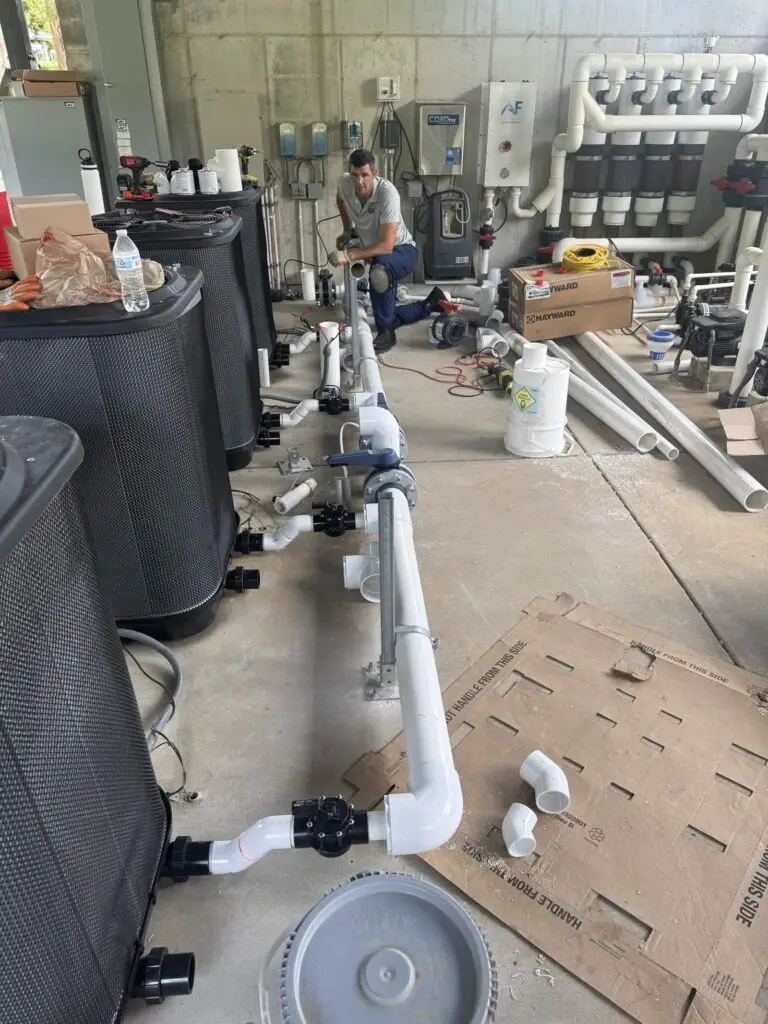
Cartridge, DE and sand filters opened, cleaned and checked when the pressure gauge says it is time.
Leaks, torn grids, broken laterals and valve gaskets repaired on cartridge, DE and sand filters.
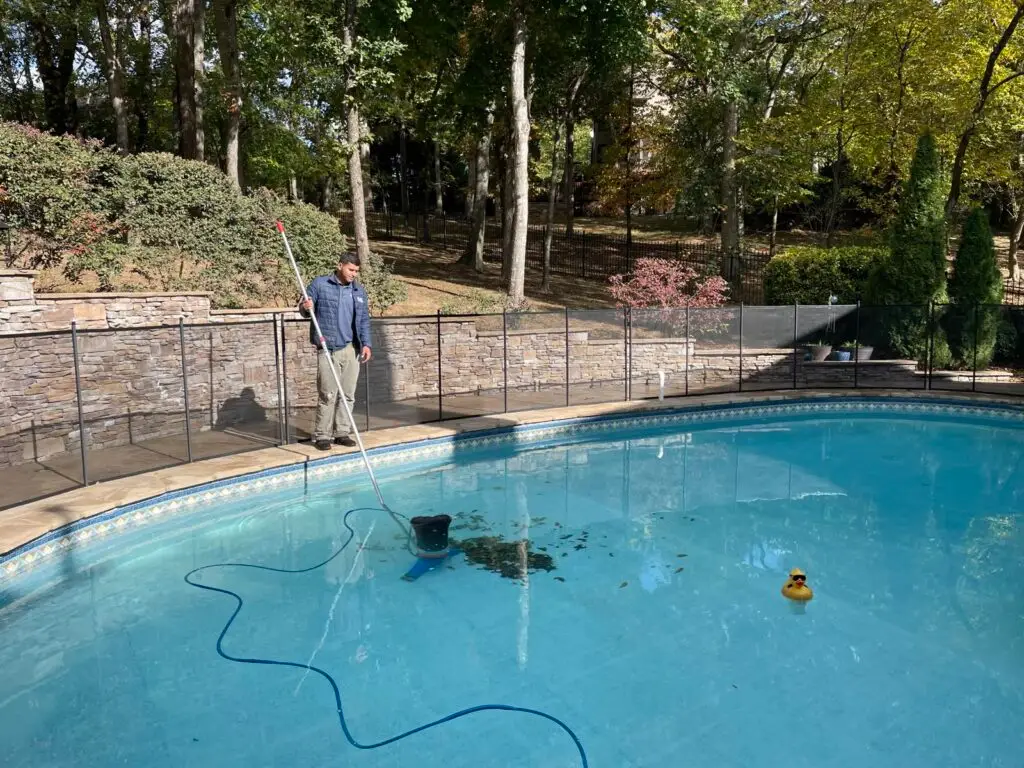
Cartridge, DE or sand filters sized to your pump, plumbed with unions and pressure tested.
Free quote
Tell us the filter model or send a photo of its label, and we will give you a free, no-pressure quote. Prefer to talk? Call (629) 247-6255.
Call or text
Based in
Murfreesboro, TN 37129. Serving Greater Nashville
Hours
Call for hours & availability
Takes less than a minute. Tell us about your in-ground pool and we'll reach out fast with a free, no-pressure quote.
No spam. Fast callback. Or call (629) 247-6255.