 Nashville
Franklin
Brentwood
Nashville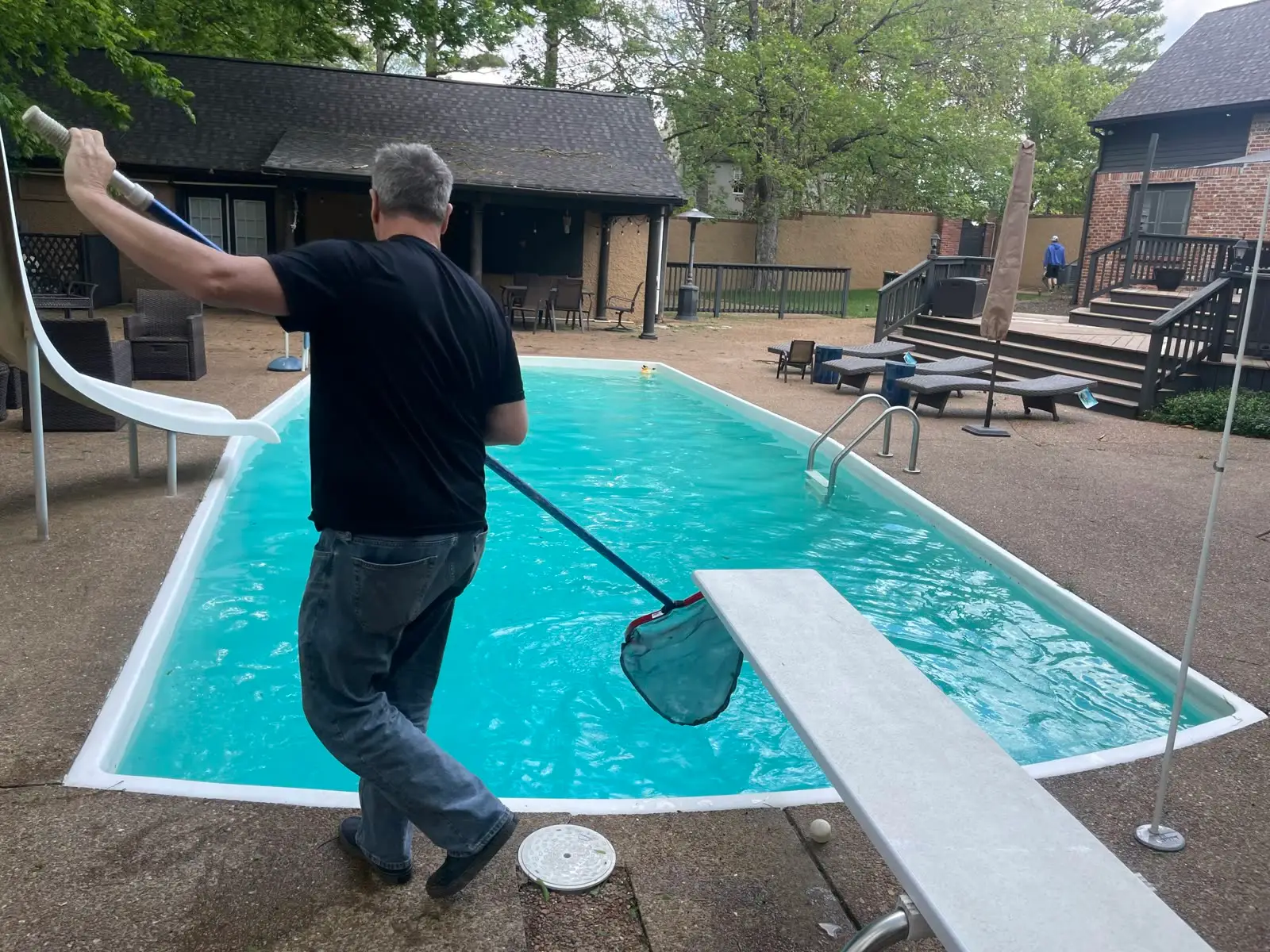
Home / Services / Specialty Services / Green Pool Cleaning
Specialty Services
Passion Pool Care offers green pool cleaning in Nashville for pools that have turned green, cloudy or swampy. We test, shock, brush and filter the water back to clear, then balance it so it stays that way.
Local
Greater Nashville based
Reliable
Weekly, like clockwork
Since 2013
Over a decade of pool care
Family Owned
Real people, real care
What's included
Pools turn green faster than most owners expect. Algae spores blow in on the wind every day, and once the chlorine runs out, they can turn clear water green in less than a day. In Middle Tennessee, that often happens after a week of storms and heat, a vacation, a spring cover removal or the purchase of a home with a neglected pool.
A green pool is more than an eyesore. You cannot see the bottom or anyone in the water, the floor gets slippery and algae can shelter bacteria. It also gets harder to fix every day it sits. The good news is that most green pools clear with the water still in them, without a drain and refill.
Our green pool cleanup starts with testing, because the cause shapes the fix. We clear out debris, get the filter working, balance the water and raise chlorine high enough to kill the algae. Then we brush, filter and clean the filter as often as it needs until the water is clear. Our team works across Davidson, Williamson and Rutherford counties. Below, you'll find how to clean a green pool the right way and how to keep it from coming back.
Is it time?
Once the water has turned, store shock alone rarely fixes it, so these signs call for a full cleanup.
01
You cannot see the floor or the main drain from the deck.
02
The water is green, yellow-green or a dull, milky gray.
03
The walls feel slimy and the steps are slippery underfoot.
04
You have shocked the pool more than once and it is still green.
05
The pool opened green after the winter cover came off.
06
You bought a home and the pool has sat untended for months.
How it works
Here is why pools turn green, how we bring them back and how to keep the water clear afterward.
Algae are tiny plants, and their spores land in outdoor pools every day on wind, rain and pollen. Pool water already holds everything they need to grow, including carbon, nitrogen and phosphorus. Chlorine is what keeps them in check. When the chlorine drops to zero, even for a short time, algae can multiply fast enough to turn a clear pool green in less than a day. That is why a green pool is almost always a chlorine problem first. The color is a sign that the pool went without enough sanitizer for too long.
Middle Tennessee weather is hard on chlorine. Summer heat speeds up algae growth, and strong sun burns chlorine away. Afternoon thunderstorms dilute the water and wash in dirt and pollen. Spring and fall bring heavy loads of pollen and leaves under the big trees in Brentwood, Franklin and Belle Meade. Short pump run times and dirty filters let algae settle in quiet corners. Add a week away on vacation, and the chlorine can run out before anyone notices. Many of the green pools we see started with one of these.
Algae are grouped by color, and the type changes the treatment. Green algae are by far the most common, and they are also the easiest to kill. They float in the water or coat the walls, and they turn the whole pool green. Black algae grow in small, hard spots on plaster, often in areas with poor circulation, and they are much harder to remove. Yellow or mustard algae cling to shady walls and often need a specific treatment. We identify the type before we start, so the plan fits.
No one should swim in a green pool. Algae themselves are not usually harmful, but they cloud the water, so you cannot see the bottom or spot a swimmer in trouble. Algae on the floor and steps make them slippery, and algae can shelter bacteria that chlorine would normally kill. Standing green water can also become a breeding spot for mosquitoes in a Nashville summer. Keep the gate locked until the water is clear and tested. The CDC's pool safety guidelines are a good reference for what healthy water looks like.
Every cleanup starts with a full water test. We check free chlorine, pH, alkalinity, calcium and stabilizer, which is cyanuric acid. pH matters a lot here. At a pH of 7.5, about half of the chlorine is in its strongest form, but at 7.8 only about a third is. Stabilizer matters just as much, because high levels slow chlorine down and make algae harder to kill. We also check for metals, since some can stain or tint the water once chlorine goes in. Those numbers tell us how much work the pool needs.
A green pool often has leaves, sticks and sludge on the floor. Every bit of that uses up chlorine and feeds algae, so we pull out as much as we can first. We empty the skimmer and pump baskets, then check the pump, filter and valves. A dirty or broken filter is a common reason a pool stays green. So we clean the filter at the start and make sure the pump primes and runs well. From that point on, the pump runs around the clock until the water is clear.
Killing algae takes far more chlorine than normal and keeping it there. A single big dose of store shock often fades before the job is done, which is why many green pools stay green. We raise the chlorine well above its normal range and hold it there with repeat doses. How high depends on the stabilizer level, since more stabilizer calls for more chlorine. We test on each visit and adjust. The water usually turns from green to blue-gray, then cloudy, as the algae dies. We keep going until it is gone.
Chlorine works much better on algae that has been knocked loose. Algae and bacteria protect themselves in a slimy layer called biofilm, and biofilm can need up to 100 times more disinfectant to kill than algae floating in the water. Brushing breaks that layer apart. We brush the walls, floor, steps and corners on every visit, with extra time in spots with poor circulation. On plaster, a steel brush helps with stubborn black algae, while vinyl pools need a softer nylon brush.
Chlorine kills algae, but the filter is what removes it. One full turnover filters only about 63 percent of the water, because clean water mixes back in with the rest. It takes about four turnovers to filter around 98 percent. That is why the pump runs nonstop during a cleanup. The filter loads up fast with dead algae, so we watch the pressure gauge closely. When it rises 8 to 10 psi above the clean reading, we backwash or clean the filter. In a bad cleanup, that can mean every day.
Many owners worry when a green pool turns cloudy white or gray. That is usually good news. It means the algae is dead and now floats as fine particles that the filter needs time to catch. We keep the chlorine up, keep the pump running and clean the filter as it loads. Once the filter, flow and chemistry are right, a clarifier can help clump the finest particles so the filter can trap them. For badly clouded pools, a flocculant can drop the debris to the floor, where it is vacuumed out to waste.
Some pools fight back because of high cyanuric acid. Stabilizer protects chlorine from the sun, which is helpful at 30 to 50 ppm. Years of chlorine tablets can push it much higher. At those levels, chlorine works more slowly, algae has an easier time growing and a cleanup needs much more chlorine. The only practical way to lower stabilizer is to replace some of the water. If your level is very high, we will recommend a partial drain and explain why before we start.
Algaecides can help prevent algae, but chlorine does the heavy lifting in a cleanup. Different types come with trade-offs. Copper algaecides work well, even on black algae, but copper can stain plaster blue-green, black or even purple when stabilizer is high. Common quat algaecides can foam if too much is added. Polyquat products do not foam and contain no metals. We use algaecides only when they help, and we pick the type with your surface in mind. In most pools, steady chlorine prevents algae on its own.
Most green pools clear with the water in place, and that is usually the safer path. Draining a pool carries risk, because groundwater can push up on an empty shell. Still, a drain can make sense when stabilizer is extremely high, when the pool has been a swamp for many months or when the water is full of sludge and leaves. In those cases, a partial drain is often enough. If a full drain is the better choice, we check the hydrostatic relief valve, watch the weather and explain the plan first.
Many green pools we clean belong to new owners. A house sits empty during a sale, the pump gets switched off and by closing day the pool has turned into a swamp. Before we treat the water, we check the equipment, because a pool that sat idle may have a failed pump, a cracked filter or a tripped breaker. Then we clear the water and walk you through the pad, so you know what you bought and how to keep it running.
Once the water is clear and the chlorine holds steady overnight, the pool is close to ready. We balance pH, alkalinity and calcium, give the filter a final cleaning and test again before anyone swims. Sometimes algae leaves a gray or dark shadow on plaster after a long green spell. Brushing and steady chlorine often fade it over the following weeks. If it stays, an acid wash may be the next step. We walk you through what we see and what, if anything, it needs.
It is far easier to prevent algae than to remove it. The key is chlorine that never runs out, plus enough filtering and brushing to keep algae from getting a foothold. Run the pump long enough to turn the water over every day, clean the filter when the pressure rises and keep stabilizer in range. Brush the walls weekly, especially in shady corners. After storms or heavy use, test and adjust. Many owners move to our weekly route after a cleanup, so the pool never goes green again.
How it works
1
Call (629) 247-6255 or send the form with a photo and how long the pool has been green.
2
We test the water, check the filter and give you a free, no-pressure quote for the cleanup.
3
We shock, brush and filter until the water is clear, then balance it before you swim.
FAQ
Still have a question? Call or text (629) 247-6255.
It depends on the pool's size, how long it has been green and how much debris and stabilizer are in the water. We test first and give you a free, no-obligation quote. Call (629) 247-6255 to set it up.
Algae grew because the chlorine ran too low. Heat, storms, pollen, a dirty filter, short pump run times or high stabilizer can all let that happen, sometimes in less than a day.
No. Green water hides the bottom and anyone in trouble, algae makes surfaces slippery and it can shelter bacteria. Wait until the water is clear and tested.
Rarely. Killing algae is only half the job, because the filter then has to remove it. Most green pools take several days, and badly neglected ones can take longer.
Raise the chlorine well above its normal range and keep it there, testing and adding more as it drops. Brush every day and run the filter nonstop until the water clears and chlorine holds overnight.
Usually the chlorine was not held high enough for long enough. High stabilizer, a dirty filter or short pump run times can also keep a pool green. Testing shows which one it is.
The algae is dead and floating as fine particles. Keep the chlorine up, run the pump and clean the filter as it loads. The water clears as the filter catches up.
That often points to metals. Chlorine can react with dissolved iron or copper and tint the water. A metals test confirms it, and we treat it before it can stain.
Remove the cover without dumping debris into the pool, scoop out leaves and get the pump and filter running. Then test the water before adding chemicals, or call us to handle it.
Sometimes. A flocculant drops debris to the floor so it can be vacuumed out to waste. It needs the pump off for many hours and careful vacuuming, so it suits some pools better than others.
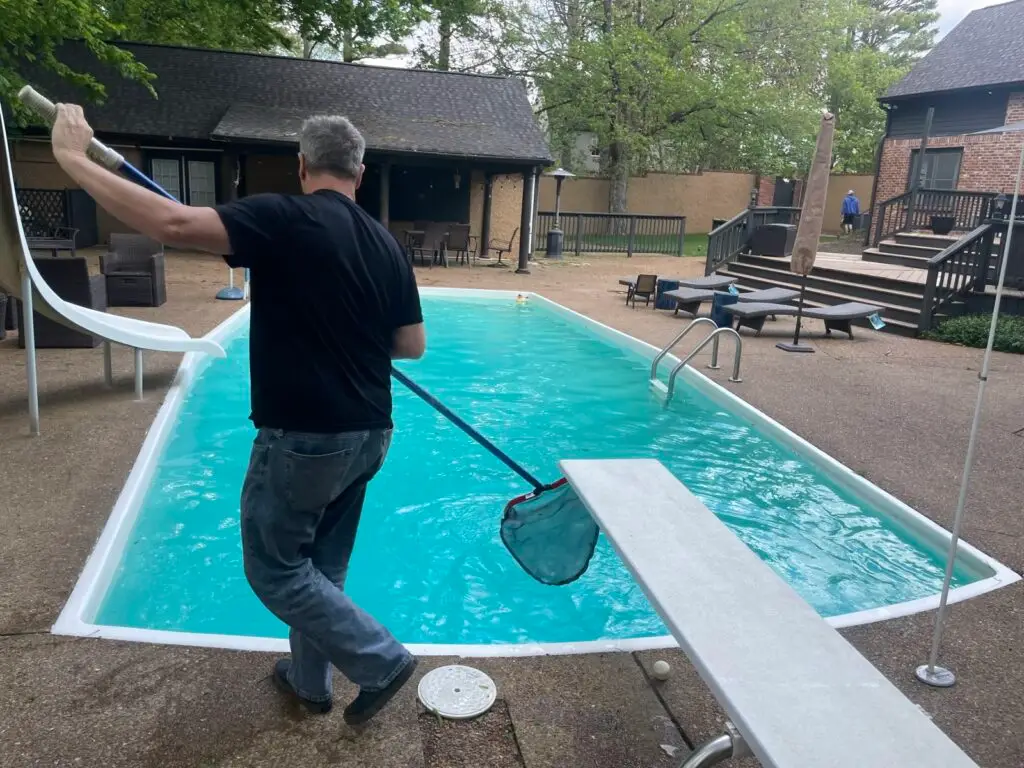
A set day every week: water balanced, walls brushed, baskets emptied and equipment checked.
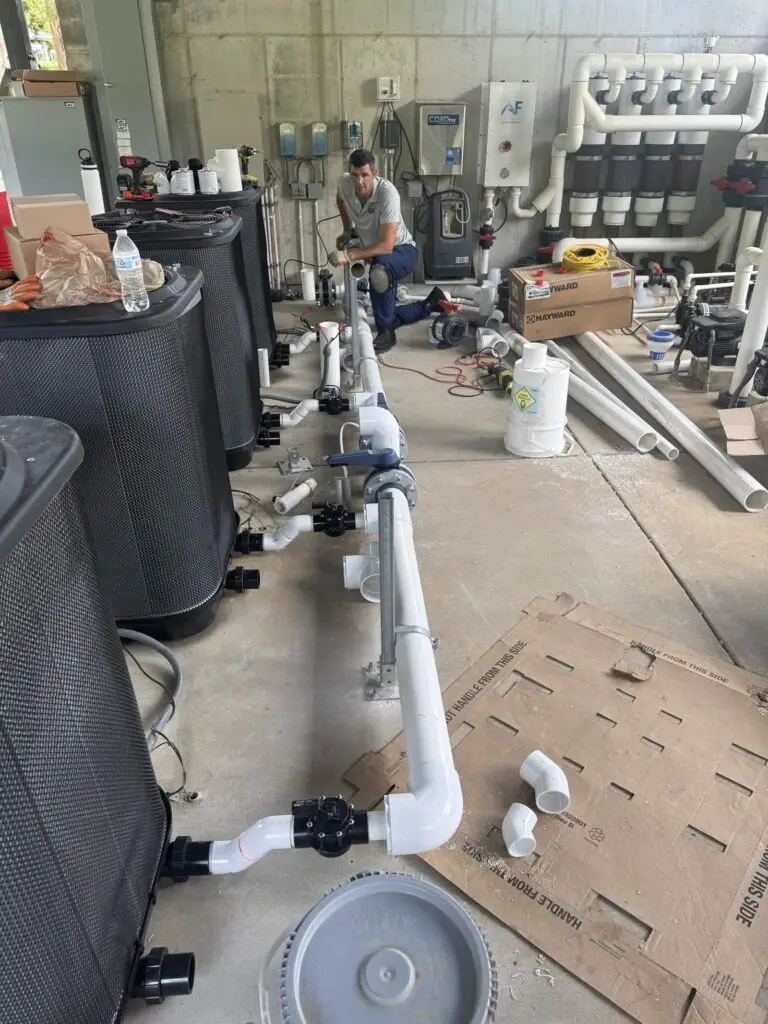
Cartridge, DE and sand filters opened, cleaned and checked when the pressure gauge says it is time.
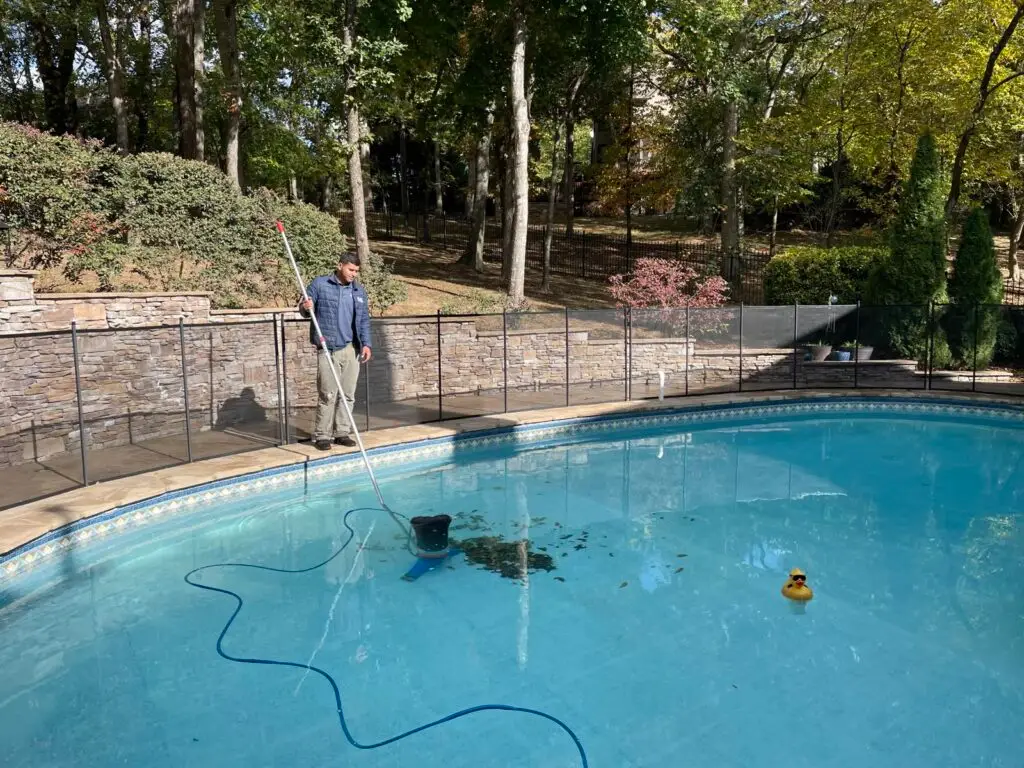
Stained or scaled plaster washed in sections, neutralized and refilled with balanced water.
Free quote
Tell us how long the pool has been green and send a photo if you can, and we will give you a free, no-pressure quote. Prefer to talk? Call (629) 247-6255.
Call or text
Based in
Murfreesboro, TN 37129. Serving Greater Nashville
Hours
Call for hours & availability
Takes less than a minute. Tell us about your in-ground pool and we'll reach out fast with a free, no-pressure quote.
No spam. Fast callback. Or call (629) 247-6255.