 Nashville
Franklin
Brentwood
Nashville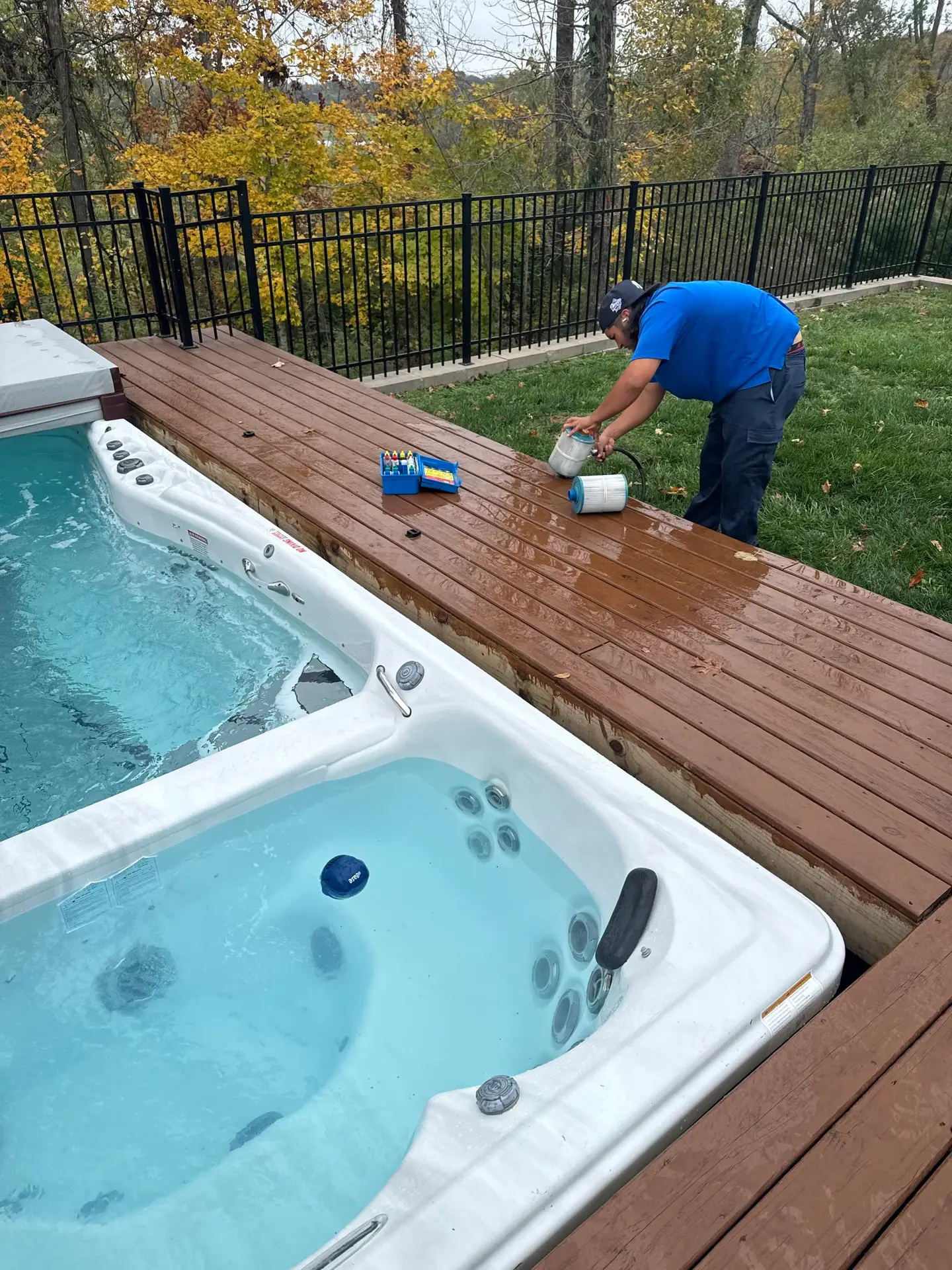
Home / Services / Pool Repairs / Spa Repair
Pool Repairs
Passion Pool Care handles spa repair in Nashville for in-ground and attached spas. Weak jets, a spa that will not heat or switch modes, a dead blower or a slow leak, we trace it to the failed part and fix it.
Local
Greater Nashville based
Reliable
Weekly, like clockwork
Since 2013
Over a decade of pool care
Family Owned
Real people, real care
What's included
A spa packs a lot of equipment into a small body of water. Jets, diverters, air controls, a blower, valves and actuators all have to work together, and the heater has to hold 98 to 104 degrees. When one part fails, the whole spa feels broken, usually on the first cool evening you want to use it.
We repair two kinds of spas. An attached spa shares the pool's pump, filter and heater and relies on valves and actuators to switch between pool and spa mode. A standalone in-ground spa has its own pump, heater and controls. Hot tub repair on either one starts with knowing how the water is supposed to move.
Our visit starts with the mode, the error code and how the water is flowing. Then we test the valves, actuators, jets, blower, pump and heater on Pentair, Hayward, Jandy, Zodiac and other major brands. You get a free quote before any parts are replaced. We repair spas across Davidson, Williamson and Rutherford counties, and below you'll find the common failures and what each fix involves.
Is it time?
These symptoms usually point to a failed part rather than a water chemistry problem.
01
Some jets are weak or have stopped working completely.
02
The pool will not switch to spa mode or the spa keeps draining into the pool.
03
The control panel shows an error code or a flow warning.
04
Your blower trips the breaker or blows no air.
05
Water keeps disappearing from the spa between refills.
06
The spa will not reach its set temperature.
Spa repairs
Here is how attached and standalone spas work, what usually breaks and how we decide what is worth repairing.
On most Nashville pools with a raised or built-in spa, the spa shares the pool's equipment. In pool mode, water returns to the pool and often spills over from the spa. In spa mode, valves swing so the pump pulls from the spa drain and sends water back through the spa jets, while the heater warms just those few hundred gallons. Motorized actuators turn those valves when you press a button. When an actuator, a valve or a setting fails, the spa will not fill, will not heat or drains into the pool. Knowing which valve should be where tells us fast where the problem is.
Weak jets are the most common spa complaint. A diverter turned the wrong way, an air control left closed or a valve not fully swung to spa mode can all cut the flow. Debris in the jet bodies, a dirty filter or a full pump basket also starve the jets. On older spas, jet inserts crack and eyeballs come loose. We check the valve positions first, then the filter and baskets, then each jet. Most weak-jet problems turn out to be simple once the flow path is traced. Only after that do we look at the pump itself.
An actuator is a small motor that turns a valve on command. Over time, gears strip, motors burn out and limit settings drift, so the valve stops short of where it should be. A spa that drains into the pool, will not fill or runs half in pool mode often has an actuator or valve problem. Storms and power surges in a Middle Tennessee summer can damage them too. We test each actuator, check its travel and replace or adjust it. Worn valve seals inside can also let water slip past, even when the actuator works.
A spa that slowly empties into the pool is a common call. In spa mode, the cause is usually a valve or actuator that has not fully closed the pool side. With the equipment off, water can siphon back through the plumbing or past a worn valve seal when the spa sits higher than the pool. A failed check valve can allow the same thing. A spa that drains below the jets with everything off may also have a leak. We find which path the water is taking, then fix the valve, seal or leak behind it.
A spa that will not reach temperature usually has a flow, valve or heater problem. If the valves are not fully in spa mode, the heater may be warming pool water too. A dirty filter or a full basket drops the flow and trips the heater's pressure switch. A heater with a scaled exchanger or a weak igniter cannot keep up. Heat pumps warm a spa slowly on cold nights, since there is less heat in the air to collect. We check the mode, the flow and the heater in order, so you are not paying for heater parts when a valve is the real problem.
The air blower pushes air through the spa to create bubbles. Blowers fail when water backs up into them, when the motor wears out or when moisture reaches the wiring, which can trip the breaker. A check valve or a high loop in the air line keeps spa water from flowing back into the blower. When that protection fails, water ruins the motor. We test the blower, check the air line and its check valve and replace what has failed. A blower that runs but adds no bubbles often has a blocked or cracked air line.
A spa that loses water faster than evaporation has a leak somewhere. The usual spots are the jet bodies and their gaskets, the spa pump seal, plumbing fittings at the equipment pad and the light niche. On an attached spa, water that spills into the pool is not a leak, but water that disappears from both is. We start at the equipment pad, where many leaks are easy to see, then check the jets, the light and the fittings. We tell you what the repair involves and quote it before any work starts.
Standalone spas and many attached spas have a separate jet pump that runs at high speed. It fails the same way a pool pump does, with failed capacitors, leaking shaft seals and worn bearings. Because it runs hard and often sits in a tight space, heat and moisture wear it out faster. A drip under the motor end is a shaft seal, and a hum with no spin is usually a capacitor. Fixing a seal leak early protects the motor bearings, which are far more expensive to replace.
Most spas are run from an automation panel, a wireless remote, a phone app or a spa-side switch. When the button does nothing, the cause could be a dead remote, a lost signal, a tripped breaker, a bad relay or a failed control board. Error codes for flow, temperature or sensors point to specific parts. We read the code and test the circuit with a meter before replacing anything. Many control problems trace back to a power surge from a summer storm, so a surge protector on the equipment circuit is worth considering.
Spa water is hard on equipment. Jets and blowers drive carbon dioxide out of the water, which pushes pH up and alkalinity down. Calcium is less soluble in hot water, so high pH or calcium leaves scale on heater tubes and jet fittings. If alkalinity drops too far, pH can swing low and the water turns corrosive to metal. Keeping a spa balanced for hot water, with calcium at 150 to 250 ppm and pH at 7.4 to 7.6, protects the heater, pump seals and jets as much as it protects swimmers.
Every spa repair includes a quick safety look. Suction outlets need intact, secured covers, and spas should have dual drains or other protection against suction entrapment. The water should never be set above 104 degrees. Covers and gates should keep young children out when no adult is watching. People who are pregnant, older or managing heart disease, diabetes or blood pressure problems should check with a doctor before soaking. If we see a missing drain cover or a cracked one, we tell you right away, because it is not something to leave until the next visit.
Spa plumbing is compact, with small lines, air channels and blowers that can trap water. A hard freeze in Middle Tennessee can crack jet lines, pump housings and heater parts in a single night. If your spa stays in use through winter, the pump needs to keep water moving on freezing nights, and freeze protection in the automation should be set and tested. If the spa is closed, the lines need to be drained and blown out. We check freeze settings before winter so the first cold snap does not turn into a repair.
A few simple checks can save a service call. Make sure the system is actually in spa mode and the valves have finished turning. Look at the pump basket and the filter gauge, since a clogged basket or dirty filter weakens jets and stops the heater. Check that no breaker has tripped and that freeze protection or a schedule is not overriding your setting. Note any error code on the panel. If the spa still will not work, turn the system off and call us with what you saw. Those details help us arrive with the right parts.
The valves, actuators, heaters, pumps and controls on Greater Nashville spas most often come from Pentair, Hayward, Jandy or Zodiac, and we repair all major brands. Each brand has its own actuators, error codes and replacement parts, so we identify the exact model before ordering. If a part has been discontinued, we tell you before the repair starts and explain the options, including newer parts that fit the same valve bodies.
Most spa problems are worth repairing. An actuator, valve seal, capacitor, check valve or jet insert costs a fraction of new equipment. Replacement makes more sense when a heater exchanger is leaking on an older unit, a pump motor has failed along with its housing or controls are obsolete. We look at the age and condition of the equipment, then give you a free quote for each option that makes sense. You decide, and there is no pressure either way.
How it works
1
Call (629) 247-6255 or send the form and tell us what the spa is doing, or not doing.
2
We check the mode, valves, jets, blower and heater, find the failed part and quote the repair before any work.
3
We make the repair, run the spa in spa mode and test it before we leave.
FAQ
Still have a question? Call or text (629) 247-6255.
Check that the valves are fully in spa mode and the filter and baskets are clean, since low flow stops the heater. If those are fine, the heater may have an ignition, sensor or scale problem. We trace it in that order.
Most weak jets come from a valve not fully in spa mode, a diverter or air control set wrong, a dirty filter or debris in the jets. A worn pump can also be the cause, but we rule out the simple fixes first.
It depends on which part failed and your equipment, so we give a free, no-obligation quote after we diagnose it. Call (629) 247-6255 to set up a visit.
Usually, yes. Most spa leaks come from jet gaskets, pump seals, fittings at the equipment pad or the light niche, and each can be repaired once it is found. We trace the leak before quoting.
Often, yes. Actuators, seals, capacitors and jet parts are modest repairs that can add years. Replacement makes more sense when major parts are failing together or are no longer made.
Usually a valve or actuator is not fully closing the pool side, or water is siphoning back past a worn valve seal or check valve when the equipment is off. We find the path and fix the valve or seal.
The valves are likely sending spa water back to the spa while pulling from the pool, or the actuators have stopped short. The settings or the actuator travel need checking.
A failed actuator can leave a valve halfway, so the spa drains through the pool side. Turn the system off and call us. Replacing or adjusting the actuator usually solves it.
Water may be siphoning back through the plumbing, or there may be a leak in a jet, fitting or line. Where the level stops is a strong clue to where the water is going.
It can. A blower adds air to the water for bubbles, and some spas pipe that air through the jets. A blower that is off or failing can make some jets feel weaker.
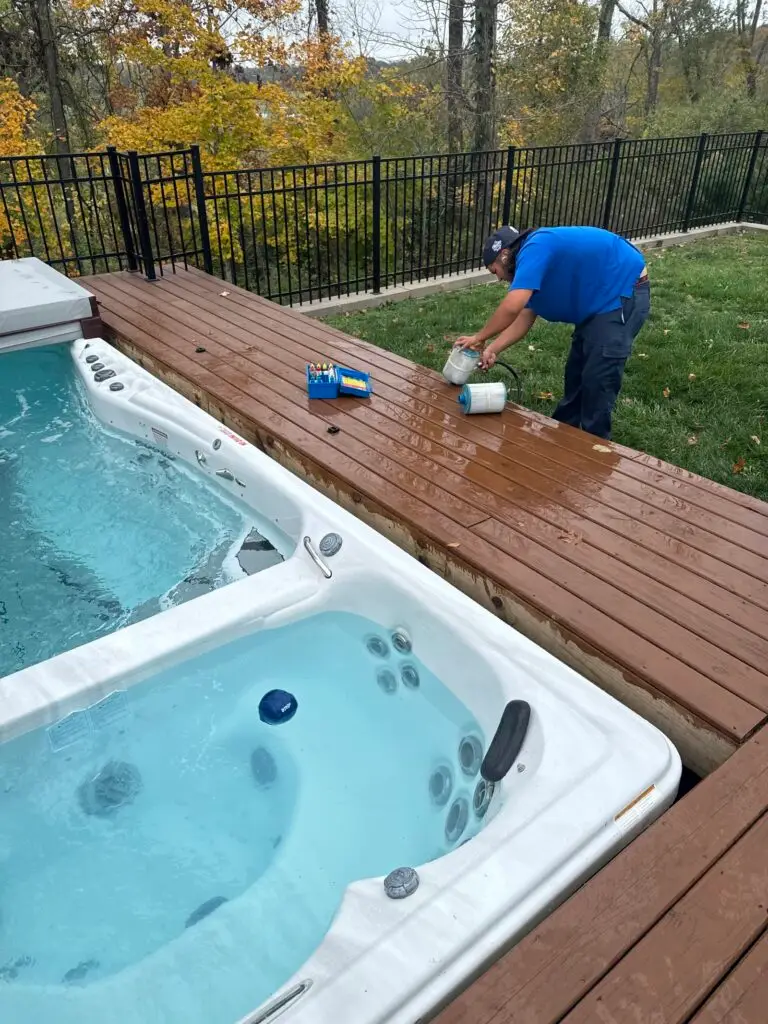
Spa water balanced on its own, jet lines flushed, shell scrubbed and filter cleaned on every drain.
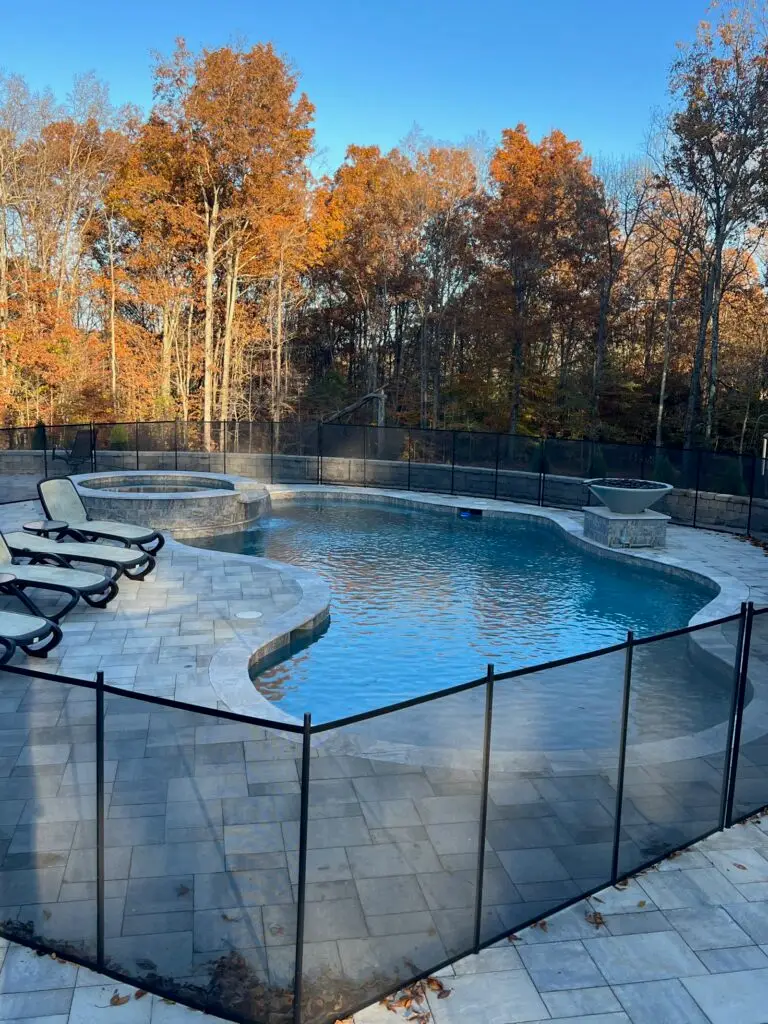
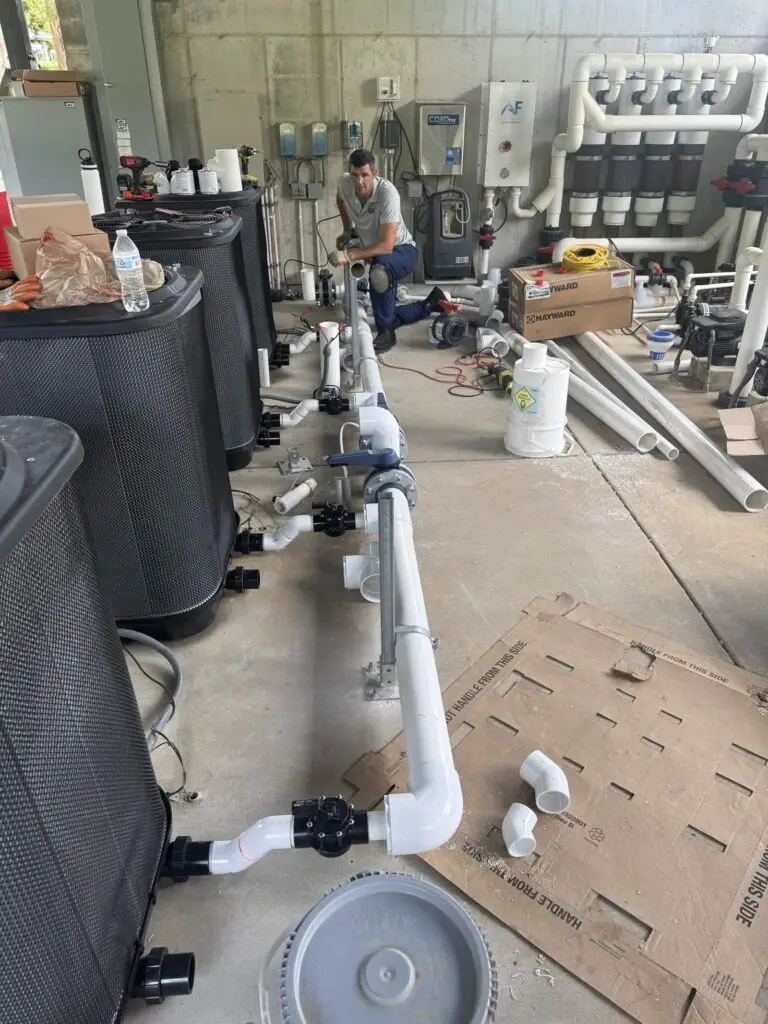
Gas heaters and heat pumps diagnosed: ignition, flow, pressure switch, heat exchanger and error codes.
Pump, heater, valves and lights on one app, installed, programmed and repaired.
Free quote
Send us a message for a free, no-pressure spa repair quote anywhere in Greater Nashville. Prefer to talk? Call (629) 247-6255.
Call or text
Based in
Murfreesboro, TN 37129. Serving Greater Nashville
Hours
Call for hours & availability
Takes less than a minute. Tell us about your in-ground pool and we'll reach out fast with a free, no-pressure quote.
No spam. Fast callback. Or call (629) 247-6255.