Author: John Dixon

  • Salt Systems vs. Traditional Chlorine: Which Is Right for Your Nashville Pool

    Salt Systems vs. Traditional Chlorine: Which Is Right for Your Nashville Pool

    One of the most common questions we get from Nashville area pool owners is whether they should switch to a salt system, or whether the traditional chlorine setup they already have is actually fine. Both approaches genuinely work, and both have real tradeoffs. Here is an honest, practical comparison rather than a sales pitch for one or the other.

    They both use chlorine, just delivered differently

    This is the part that surprises a lot of people. A salt system does not replace chlorine. It generates chlorine on-site by passing dissolved salt through an electrolytic cell, converting it into the same sanitizing chlorine that traditional systems add manually through liquid, tablets, or granular product. A salt pool is not chemical-free. It is a different delivery method for the same sanitizer.

    The feel difference people actually notice

    The most commonly reported benefit of a salt system is water that feels softer and less harsh on skin and eyes compared to traditional chlorine, particularly for swimmers who are sensitive to strong chlorine smell or irritation. This is a real and consistent observation, though it is worth noting that a traditional pool with well-balanced chemistry should not have a strong chlorine smell either. A strong chlorine odor is actually a sign of chloramines, a byproduct of chlorine reacting with contaminants, not a sign of too much chlorine itself.

    Upfront cost versus ongoing cost

    A salt system requires a real upfront investment: the salt cell, the control unit, and the initial salt to bring the pool to the correct salinity level, which is usually a one-time cost unless water is significantly diluted by heavy rain or a partial drain. Traditional chlorine has a lower upfront cost but a steady ongoing expense of buying chlorine product regularly. Over several years, many salt system owners find the total cost comparable or lower, but the upfront number is real and worth planning for.

    Maintenance tradeoffs that matter

    Salt systems reduce the task of manually adding chlorine, which is genuinely convenient for owners who want less hands-on involvement. But the salt cell itself is a wear component. It gradually degrades with use and needs replacement every few years depending on usage and water balance, and that replacement is a real cost that traditional systems do not have. Traditional systems require more frequent manual chlorine additions but have no comparable wear component tied specifically to sanitizing.

    What each system does to your pool equipment and surfaces

    Salt water, even at the relatively low concentration used in pool systems, can be more corrosive to certain metal fixtures, ladders, handrails, and some heater components over time if they are not rated for salt water use. This is manageable with the right equipment specifications, but it is a real consideration for pools with older metal fixtures that were not installed with a future salt conversion in mind. Traditional chlorine systems do not carry this particular risk to metal components.

    Which owners tend to prefer which system

    Owners who want softer-feeling water and less hands-on chlorine handling often lean toward a salt system once they understand the tradeoffs. Owners who want the lowest possible upfront cost, who do not mind the routine of adding chlorine product, or who have pool equipment not rated for salt water often stick with traditional systems, and there is nothing wrong with that choice either. Neither system is objectively better. They fit different priorities.

    What professional weekly service changes about this decision

    Regardless of which system a pool uses, the value of professional weekly service is largely the same: consistent monitoring of pH, alkalinity, sanitizer levels, and stabilizer, catching drift before it becomes a visible problem, and keeping equipment running efficiently. A salt system does not run itself without oversight any more than a traditional system does. It changes how chlorine gets into the water, not whether the water still needs regular professional attention to stay balanced and clear.

    Converting an existing pool to salt

    For owners considering a conversion, the process involves installing the salt cell and control equipment, verifying existing fixtures and heater are salt-compatible or upgrading the ones that are not, and bringing the water to the correct salinity level. It is a bigger project than a simple chemical swap, and it is worth a real conversation about your specific pool and equipment before committing. Our salt system service covers conversions, cell cleaning and replacement.

    Getting an honest recommendation for your pool

    The right answer depends on your equipment, your budget, and your personal preference on hands-on maintenance versus upfront investment. We service both types of systems across Nashville, Franklin, Brentwood, and Eagleville, and we are happy to walk through what makes sense for your specific pool rather than pushing one system over the other.

    Call (629) 247-6255 if you want an honest read on whether a salt conversion makes sense for you, or if you just want your current system running at its best.
  • Pool Water Chemistry Explained: Chlorine, pH, Alkalinity, and Stabilizer

    Pool Water Chemistry Explained: Chlorine, pH, Alkalinity, and Stabilizer

    Pool chemistry intimidates a lot of homeowners because it looks like a wall of numbers with no clear relationship between them. In reality, there are really just four measurements that matter most, and understanding how they interact makes the whole picture click into place.

    Chlorine: the sanitizer, but not the whole story

    Chlorine is what actually kills bacteria and algae, but the number on a test strip only tells part of the truth. What matters is “free chlorine,” the portion actively available to sanitize the water, as opposed to chlorine that’s already been used up neutralizing contaminants. A pool can show chlorine on a test and still be under-sanitized if most of that chlorine is already spent. This is one reason a professional test, which distinguishes free from total chlorine, is more reliable than a basic strip.

    pH: the number that controls everything else

    pH measures how acidic or basic the water is, and it’s arguably the most important number in the entire chemistry picture because it directly affects how well chlorine works. When pH climbs too high, chlorine becomes dramatically less effective at sanitizing, even if the chlorine level itself looks fine on paper. When pH drops too low, water becomes corrosive to pool equipment and surfaces, and can irritate swimmers’ eyes and skin. The ideal range is a narrow band, and it drifts constantly from sun exposure, rain, and even swimmers themselves, which is why it needs regular rechecking rather than a one-time fix.

    Total alkalinity: the buffer that keeps pH stable

    Total alkalinity acts as a buffer that resists sudden swings in pH. If alkalinity is too low, pH becomes unstable and can swing wildly from something as simple as adding chemicals or heavy rain, a frustrating cycle sometimes called “pH bounce.” If alkalinity is too high, it can push pH upward and make it stubbornly resistant to correction. Getting alkalinity into the right range first is often the key to actually being able to hold a stable pH afterward. Trying to fix pH without addressing alkalinity is like trying to balance on a surface that keeps moving.

    Cyanuric acid (stabilizer): protecting chlorine from the sun

    Sunlight breaks down unprotected chlorine remarkably fast. A pool with no stabilizer can lose most of its chlorine to UV degradation within a few hours on a sunny day. Cyanuric acid, often just called “stabilizer” or “conditioner,” shields chlorine from the sun so it lasts long enough to actually do its job. The tricky part is that stabilizer only needs to be added occasionally, since it doesn’t break down or evaporate the way chlorine does. Too much stabilizer actually makes chlorine less effective, a condition sometimes called “chlorine lock,” which is a common outcome of guessing rather than testing.

    Calcium hardness: the number people forget

    Less talked about but still important, calcium hardness affects the water’s tendency to either deposit scale on surfaces and equipment (too high) or become corrosive and eat away at plaster and metal fixtures (too low). It moves slowly compared to chlorine and pH, so it needs less frequent attention, but ignoring it for years can lead to expensive surface or equipment damage.

    Why these numbers have to be looked at together

    The core reason pool chemistry confuses people is that these measurements aren’t independent. They interact. High pH weakens chlorine’s effectiveness. Low alkalinity destabilizes pH. Too much stabilizer blunts chlorine even when the chlorine level looks correct. Adjusting one number without checking the others is why so many DIY chemistry attempts end up chasing the same problem in circles, adding more of something that isn’t actually the root cause.

    What weekly professional service actually checks

    A proper weekly visit tests all of these levels together, not just chlorine, and adjusts them in the right order: typically alkalinity first, then pH, then chlorine and stabilizer as needed. It also accounts for factors a one-time test misses: how much the pool was used that week, whether it rained, and how the readings have trended over previous visits, which catches slow drifts before they become a visible problem like cloudy or green water. That is the approach behind our weekly pool service.

    The cost of chasing green water versus staying ahead of it

    Recovering a pool that’s already gone green or cloudy takes more chemicals, more time, and more cost than maintaining consistent weekly balance in the first place. Consistent chemistry isn’t just about clear water today. It protects your surfaces, your equipment, and your wallet from the much larger cost of a full recovery. If your pool has already turned, our green pool cleaning service can bring it back.

    Want your pool’s chemistry handled properly, every week, without the guesswork? Call (629) 247-6255 and we’ll set up a service schedule that keeps it right.

  • How Often Should Your Pool Really Be Cleaned?

    How Often Should Your Pool Really Be Cleaned?

    A clean pool is not only about looks. It is about safe water, balanced chemistry and protecting the pump, filter and heater that keep everything running. So how often does a pool really need cleaning in Nashville? Here is a straight answer from a family-owned crew that has cared for Greater Nashville pools since 2013.

    How often should a pool be cleaned? The short answer

    For most in-ground pools in Middle Tennessee, professional pool cleaning once a week is the right schedule during swim season. Weekly visits keep chlorine and pH in range, clear debris before it sinks and stains, and catch small equipment problems early. In spring pollen season, after storms and during heavy summer use, a pool may need extra attention between visits.

    Why weekly pool cleaning is the standard in Nashville

    Pool water changes every day. Sun burns off chlorine, rain dilutes it, swimmers add oils and sunscreen, and wind drops leaves and dust into the water. In a Nashville summer, when water temperatures climb into the upper 80s, those changes happen faster than most homeowners expect.

    • Weekly pool cleaning keeps chlorine high enough to stop algae before it starts.
    • Weekly brushing removes the film where algae and scale take hold on walls and steps.
    • Weekly basket and filter checks keep water moving, which keeps it clear.
    • Weekly visits mean the same technician notices when something looks or sounds different.

    What a professional weekly pool cleaning visit includes

    A real pool cleaning visit is more than a quick skim. If any of these steps get skipped, problems sneak up quietly until the water turns cloudy or green.

    • Pool water tested and balanced: chlorine, pH, alkalinity and stabilizer.
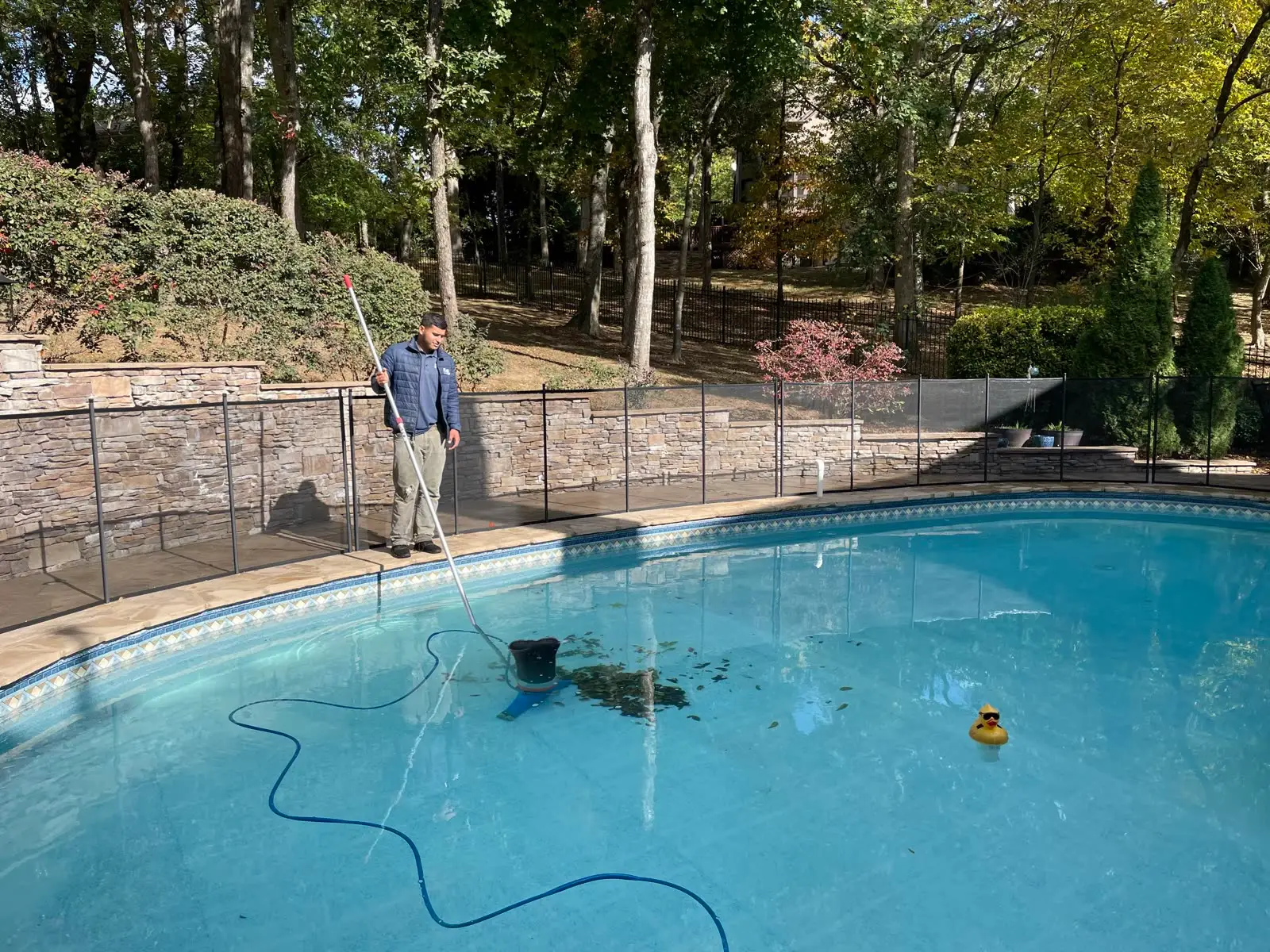
    • Pool surface skimmed for leaves, pollen and bugs.
    • Pool walls, steps and tile line brushed.
    • Pool floor vacuumed where debris has settled.
    • Skimmer and pump baskets emptied.
    • Pool filter pressure checked, with cleaning scheduled when it climbs.
    • Pool pump, heater and equipment looked over for leaks or noises.

    That is exactly what our weekly pool service covers on every visit.

    When your pool needs cleaning more than once a week

    Some weeks ask more of a pool than others. Plan on extra skimming, brushing or a chemistry check when:

    • Spring pollen leaves a yellow film on the water across Franklin, Brentwood and Green Hills.
    • An afternoon thunderstorm washes leaves, dirt and clay into the pool.
    • A pool party or a long holiday weekend brings a lot of swimmers.
    • Fall leaves drop faster than the skimmer can hold them.
    • The water starts to look dull, cloudy or slightly green between visits.

    Is biweekly or monthly pool cleaning ever enough?

    Every two weeks can work for a covered pool in the off season or a pool that sits under very little tree cover, as long as someone checks the chemistry in between. Monthly cleaning is rarely enough during swim season in Middle Tennessee. Two weeks of summer heat without balanced chlorine is usually all it takes for algae to bloom, and a green pool takes far more work to recover than it would have taken to prevent.

    How pool cleaning needs change through Middle Tennessee seasons

    SeasonWhat the pool is facingPool cleaning focus
    SpringPollen, seed pods and the first warm days after openingBrushing, filter cleaning and bringing chemistry back into balance
    SummerHeat, heavy swimming and afternoon stormsWeekly testing, steady chlorine and fast debris removal
    FallHeavy leaf drop from mature treesFrequent skimming, basket cleaning and keeping leaves off the floor
    WinterFreezing nights and a closed or covered poolFreeze protection and periodic chemistry checks

    What skipping pool cleaning really costs

    Letting pool cleaning slide saves a little now and costs a lot later. Most of the expensive pool problems we see started as a few missed weeks.

    • Algae blooms that need shocking, brushing and filter cleaning to clear.
    • Stained plaster and calcium scale along the waterline tile.
    • Clogged filters that make the pump work harder and wear out sooner.
    • Equipment problems that grow into repairs because nobody caught them early.

    Consistent care is always easier on your pool than a recovery. If your pool already looks green, our green pool recovery service can bring it back.

    Set up a weekly pool cleaning schedule in Nashville

    Passion Pool Care keeps in-ground pools clear across Davidson, Williamson and Rutherford counties with the same friendly technician every week and no long-term contract. Call (629) 247-6255 or request a free quote and we will set up a schedule that fits your pool.

  • What’s Included in Professional Weekly Pool Service?

    What’s Included in Professional Weekly Pool Service?

    “Pool cleaning” means very different things from different companies. Here’s what a real weekly visit covers.

    The weekly checklist

    • Skim the surface of leaves and debris.
    • Brush walls, steps and the tile line where algae starts.
    • Empty the skimmer and pump baskets.
    • Vacuum the pool floor.
    • Test and balance the water: pH, chlorine, alkalinity and more.
    • Check the equipment: pump, filter and flow, every visit.

    What separates premium service

    The checklist is the baseline. What actually protects your pool is consistency and attention: the same technician who knows your pool and notices the small change before it becomes a repair, precise chemistry instead of guesswork, and someone keeping an eye on your equipment week after week.

    What to expect from us

    We show up on schedule, care for every aspect of your pool, and keep the water swim-ready so you never have to think about it. In-ground residential pools are our specialty across Brentwood, Franklin and Nashville. See everything our weekly pool service includes.

    Frequently asked questions

    Do I need to be home for service?

    No. As long as we have gate or equipment access, you don’t need to be home. We care for every aspect of your pool on each visit.

    Will I have the same technician each week?

    That’s the goal. A consistent tech who knows your pool is a big part of why our clients stay with us.

    How do I get started?

    Call (629) 247-6255 or request a free quote. We’ll look at your pool and set up a weekly schedule that fits it.

  • How to Keep Your Pool Crystal Clear Through a Tennessee Summer

    How to Keep Your Pool Crystal Clear Through a Tennessee Summer

    Heat, pollen and afternoon thunderstorms are hard on Middle Tennessee pools. Here’s how to stay ahead of them.

    Why summer is tough on Tennessee pools

    High water temperatures speed up chlorine loss and algae growth, spring and early-summer pollen loads the water, and our pop-up thunderstorms dump debris and dilute your chemistry in an afternoon. Staying clear is all about staying ahead.

    The habits that keep water clear

    • Run the pump long enough: in peak heat, aim for good daily turnover so the water is actually filtering.
    • Keep sanitizer steady: heat burns off chlorine faster; don’t let it bottom out.
    • Brush and skim regularly: algae starts on surfaces before you see it in the water.
    • Clean the filter and empty baskets: a clogged filter can’t clear a pool.
    • Test often, especially after storms and heavy use.

    After a storm

    Skim the debris, check and rebalance the water, and run the filter longer than usual. A big rain can swing your chemistry enough to start a bloom if it sits.

    When to hand it off

    If you’d rather spend summer swimming than testing water, that’s exactly what weekly pool service is for. We keep the chemistry, circulation and cleaning handled so your pool is always ready.

    Frequently asked questions

    My pool turned cloudy overnight, what happened?

    Usually a filtration or balance issue after heat, heavy use or a storm. If basic rebalancing doesn’t clear it in a day or two, have it looked at.

    How often should I test in summer?

    More than in spring or fall. Heat and storms move your chemistry quickly. A pro on a weekly schedule catches it before you see a problem.

    Can you rescue a pool that’s already green?

    Yes. Our green pool cleaning service tests, shocks, brushes and filters a green pool back to clear, then balances it to stay that way.

    Keep your pool clear all summer

    Call (629) 247-6255 or request a free quote for weekly service across Greater Nashville.

  • 7 Signs Your Pool Pump or Equipment Needs Repair

    7 Signs Your Pool Pump or Equipment Needs Repair

    Pool equipment rarely fails without warning. Catch these signs early and you’ll usually turn a big repair into a small one.

    Your pump, filter, heater and automation are the heart of your pool. Here are the signs it’s time to have them looked at:

    • A loud or screeching pump: often failing bearings; cheap to fix early, expensive if ignored.
    • Weak circulation or low pressure: the water isn’t turning over, so it won’t stay clear.
    • Visible leaks or a dropping water level: wasted water and a risk to equipment and plumbing.
    • Heater won’t fire or won’t hold temperature: a common and very fixable failure.
    • Cloudy water despite good chemistry: usually a filtration or flow problem, not a chemical one.
    • Rising electric bills: a struggling pump draws more power.
    • Air bubbles or a tripping breaker: signs of a suction-side leak or electrical fault that shouldn’t wait.

    When to call

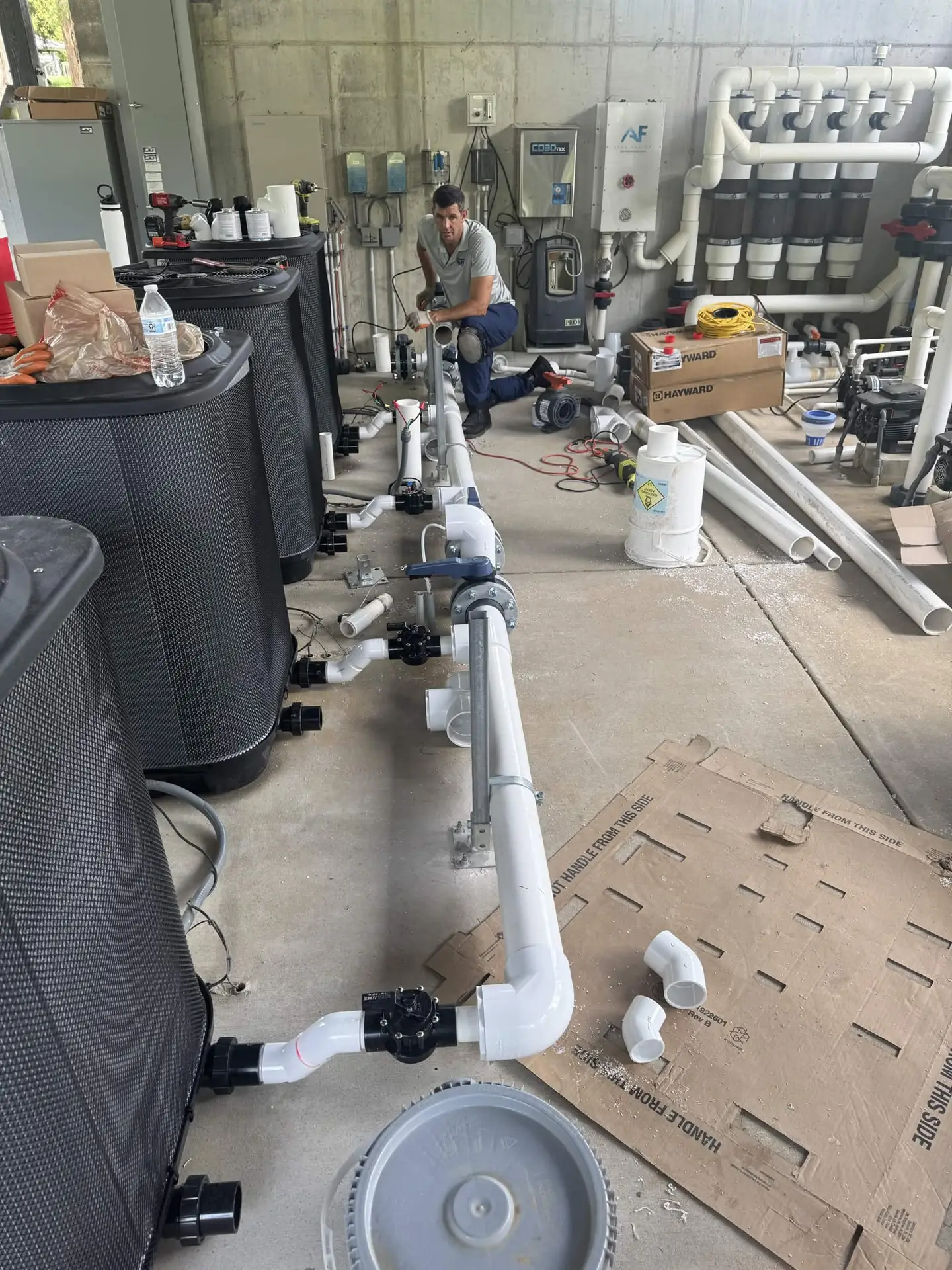
    If you notice any of these, it’s worth an honest diagnosis before the problem cascades. Our pool repair team works on pumps, filters, heaters, salt systems, automation and leaks, on our own customers’ pools and for outside repair calls, and we work on all major brands.

    Frequently asked questions

    Do you repair equipment for pools you don’t clean?

    Yes. Weekly cleaning is our core service, but we also take outside equipment-repair calls across Greater Nashville.

    What brands do you work on?

    All the major pool equipment brands: pumps, filters, heaters, salt systems and automation.

    Get your equipment checked

    Call (629) 247-6255 or request a free quote and we’ll diagnose the problem before it turns into a bigger repair.

  • Salt Water vs. Chlorine: Which Is Right for a Tennessee Backyard?

    Salt Water vs. Chlorine: Which Is Right for a Tennessee Backyard?

    They’re more alike than most people think. Here’s the real difference and how to choose for a Nashville-area pool.

    First, a myth to clear up

    A “salt water” pool is still a chlorine pool. A salt chlorine generator simply makes chlorine from salt on-site instead of you adding it. So both types are sanitized by chlorine. The difference is how that chlorine gets there.

    Salt water: pros and cons

    Pros: softer-feeling water, less handling of chlorine, steadier day-to-day sanitizer levels. Cons: higher up-front equipment cost, salt cells wear out and need replacement, and salt can be tougher on some stone and metal fittings over time.

    Traditional chlorine: pros and cons

    Pros: lower equipment cost, simpler to correct quickly, easy to shock. Cons: more hands-on dosing and storage of chemicals if you maintain it yourself.

    Which is better for a Tennessee pool?

    Both work beautifully here. The “right” one depends on your budget, your finish and your preferences. What matters far more than salt vs. chlorine is consistent weekly balancing. Either system will stay clear and gentle when the chemistry is managed properly, and either will turn on you when it isn’t.

    Frequently asked questions

    Do you service both salt and chlorine pools?

    Yes. We maintain and repair both, including salt cell cleaning and system checks, across Greater Nashville. See our salt system service for details.

    Is salt water really lower maintenance?

    It reduces day-to-day chlorine handling, but it still needs regular testing and balancing, and the generator needs upkeep. It’s different maintenance, not no maintenance.

    Can I convert my chlorine pool to salt?

    Yes. We handle chlorine-to-salt conversions. Call (629) 247-6255 and we’ll look at your equipment first so the conversion is done right.

  • When to Open and Close Your Pool in Middle Tennessee

    When to Open and Close Your Pool in Middle Tennessee

    Middle Tennessee’s swing seasons make timing tricky. Here is when to open, when to close, and why both matter.

    When to open (spring)

    The sweet spot is when daytime temperatures are consistently in the 70s, usually mid-April to early May around Nashville. Opening earlier than you’ll swim isn’t wasted: it’s far easier (and cheaper) to bring a balanced pool up to temperature than to fight an algae bloom that took hold under a cover in March.

    When to close (fall)

    Wait until water temperatures hold below about 60°F, typically late October into November. Closing too early while the water is still warm invites algae; closing properly once it’s cold protects your plumbing and surfaces through winter.

    Why timing matters

    • Open late and you inherit a green pool and a bigger bill.
    • Close wrong and a freeze can crack plumbing lines and equipment, one of the most expensive pool repairs there is.

    Do you even need to close?

    Some Middle Tennessee owners keep systems running through mild winters with freeze protection instead of a full close. Which approach is right depends on your equipment and how you use the pool. We’re happy to advise.

    Frequently asked questions

    Can you open or close my pool for me?

    Yes. We handle spring openings, fall winterizing and freeze protection through our pool opening and closing service.

    What happens if I skip closing?

    A hard freeze can crack pipes, pumps and filters. Proper winterizing protects the equipment you’ve invested in.

    How long does an opening take?

    Most take a single visit to uncover, reconnect, clean and start balancing, then a follow-up to dial the water in.

    Book your opening or closing

    Call (629) 247-6255 or request a free quote to get your pool on the schedule for the season.

  • How Much Does Weekly Pool Service Cost in the Nashville Area?

    How Much Does Weekly Pool Service Cost in the Nashville Area?

    A straight answer on what weekly pool care costs in Middle Tennessee, and why the cheapest quote is rarely the cheapest in the long run.

    The honest answer is that no two pools cost the same to maintain. A small, well-kept in-ground pool in Franklin is a very different job from a large gunite pool with a spa, water features and heavy tree cover in Leipers Fork. That is why any reputable company gives you a free, in-person or photo-based quote rather than a number over the phone.

    What we can tell you is exactly what moves the price, so you know whether a quote is fair.

    What determines your weekly price

    • Pool size and water volume: more water means more chemicals and more surface to clean.
    • Surface type: gunite/plaster, vinyl and fiberglass each behave differently and need different care.
    • Features: attached spas, water features, saltwater systems and automation add time and complexity.
    • Condition and landscaping: heavy tree canopy, pollen season and nearby construction all add debris.
    • Frequency: most homeowners are once a week; a few high-use estates need multiple visits.

    What premium weekly service should include

    At the higher end of the market, “pool cleaning” should mean more than a quick skim. Every visit should cover skimming, brushing walls and tile, emptying skimmer and pump baskets, vacuuming, a full water test with precise chemical balancing, and an equipment check, all with the same technician who knows your pool. That is what our weekly pool service covers.

    Why the cheapest quote usually costs more

    Under-priced service almost always means shortcuts: skipped visits, guessed-at chemistry, and no one watching your equipment. Unbalanced water quietly etches plaster and shortens the life of pumps and heaters. Those repairs dwarf what you saved. For a serious pool, consistent, professional care is the cheaper path over five years, not the more expensive one.

    Frequently asked questions

    Is weekly service worth it over every other week?

    For most Middle Tennessee pools, yes. Our heat, pollen and afternoon storms let algae and chemistry get away from a pool fast, and weekly care keeps small issues from becoming expensive ones.

    Can you give a price over the phone?

    We can give you a ballpark, but an accurate flat price needs a quick look at your pool’s size, type and condition, which we do free.

    Get an honest quote for your pool

    Call (629) 247-6255 or request a free quote and we will give you a straight, no-pressure price for weekly service across Greater Nashville.